Dermatologists are sounding the alarm on plastics in personal care products. Here’s what the latest research says – and the practical steps we can all take to reduce unnecessary exposure.
Over the past decade, beauty routines have become increasingly sophisticated.
From multi-step skincare regimens to the latest “must-have” products trending on social media, the personal care industry has grown into one of the world’s largest consumer markets.
In 2026 alone, it is expected to generate more than US$670 billion in revenue.
Hidden behind these figures, though, is a glaring issue: the environmental footprint of this growing industry.
With the industry’s growth has come a significant increase in plastic packaging.
The global cosmetics packaging market alone was valued at more than US$55 billion in 2024, with skincare accounting for the largest share.
This can include packaging made of plastic, as well as plastic coated packaging.
Although cosmetics packaging might be made of natural materials, such as paper or cardboard, they can often be finished with a coating that contains plastic chemicals, be it for aesthetics or barrier protection.
This means that this kind of packaging contributes to chemical exposure, as well as making the material non-recyclable.
To put this into perspective, ten billion tonnes of virgin plastic have been produced between 1950 and 2024, with approximately half of this produced since 2011.
While plastic packaging makes up around 35 per cent of global plastic consumption, we don’t yet know what additional share plastic coated packaging might take up.
Because many personal care products are packaged in single-use plastics, the industry has become a significant contributor to plastic waste throughout its lifecycle, particularly when packaging is not recovered or recycled.
And since plastics are made of fossil fuels, all plastic associated packaging represents a major carbon footprint.
But plastics in personal care products are not only an environmental issue. Increasingly, there is another significant concern bubbling beneath the surface.
Human health.
Scientists are concerned that we don’t just ingest and inhale elements of plastic, but we absorb them through our skin.
These elements come both from the plastic packaging and from the products themselves.
The use of plastics in personal care products is well documented, particularly the use of plastic microbeads in products such as exfoliants.
While plastic microbeads are perhaps the best-known example, they represent only one part of the picture.
In addition to those, there are the other types of exposure to plastic from these products.
Scientists now distinguish between three different types of exposure:
- Plastic-associated chemicals intentionally added to improve texture, stability or shelf life.
- Chemicals that migrate from plastic packaging into products, including phthalates, bisphenols, PFAS and UV filters.
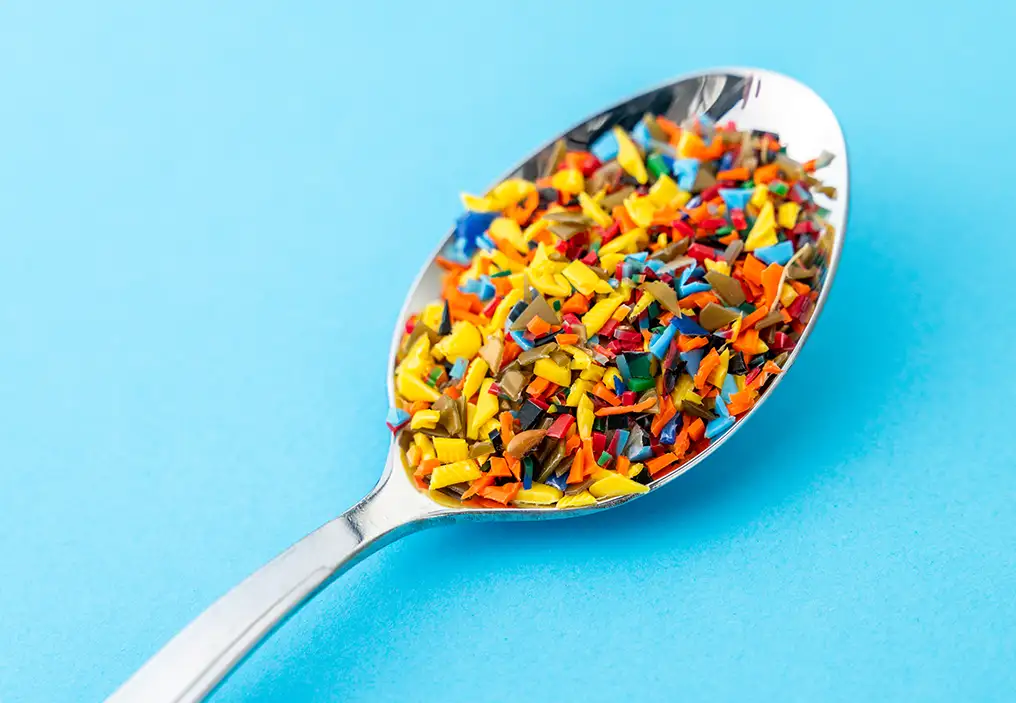
- Microplastics and nanoplastics (particles released from plastic packaging during use).
Importantly, scientists distinguish between two related but separate issues: the plastic material itself – including tiny particles, microplastics and nanoplastics – and the chemicals added to plastics to give it functionality.
Both deserve attention, as they can affect human health in different ways.
According to the latest research by Anderson et al., scientists now recognise several different ways plastics and plastic-associated chemicals can be present in personal care products.
While our Director of Plastics, Dr. Sarah Dunlop, collaborated on this research, Minderoo Foundation had no influence on the conduct or the reporting of this study.
There is growing concern about how these plastic substances may affect the skin and other aspects of human health, with dermatologists now weighing into the global conversation about plastic health harms.
Emerging research has linked nanoplastics and plastic-associated chemicals (PACs) to a range of skin conditions, including:
- Skin inflammation
- Skin senescence (which is associated with the aging of cells, causing less collagen and elastin produced, so thinner, less elastic skin)
- Acne
- Atopic dermatitis
- Skin cancer, and
- Urticaria (hives, which are raised, itchy welts).
Some plastic-associated chemicals are already known to harm human health in other ways, particularly with long-term exposure, increasing the risk of negative health outcomes across every stage of life, as outlined by PlasticHealthAware.
Many others remain largely untested, meaning their potential impacts on human health are still unknown.
Likewise, other human health harms from micro- and nanoplastics are also largely unknown, although scientists are increasingly concerned by the emerging evidence.
We may be exposed to plastics in more ways than we realise. We can absorb it through our skin, including through daily routines like washing and moisturising our skin, or through the use of sunscreen.
Scientists and dermatologists are calling for:
- Better regulation and transparency in product ingredients.
- Safer personal care product alternatives that are plastic-free and packaged in sustainable materials.
- More research into the links between plastics and plastic-related substances and skin disease and the extent to which personal care product use contributes to environmental plastic pollution.
Here are six practical ways consumers, healthcare professionals, industry and governments can help reduce unnecessary exposure and drive safer outcomes.
1. Make simple changes to your skincare routine
Small changes can help reduce both plastic waste and potential exposure to plastic-associated chemicals.
- Use fewer, evidence-based skincare products where possible.
- Keep routines simple, focusing on cleansing, moisturising and sun protection.
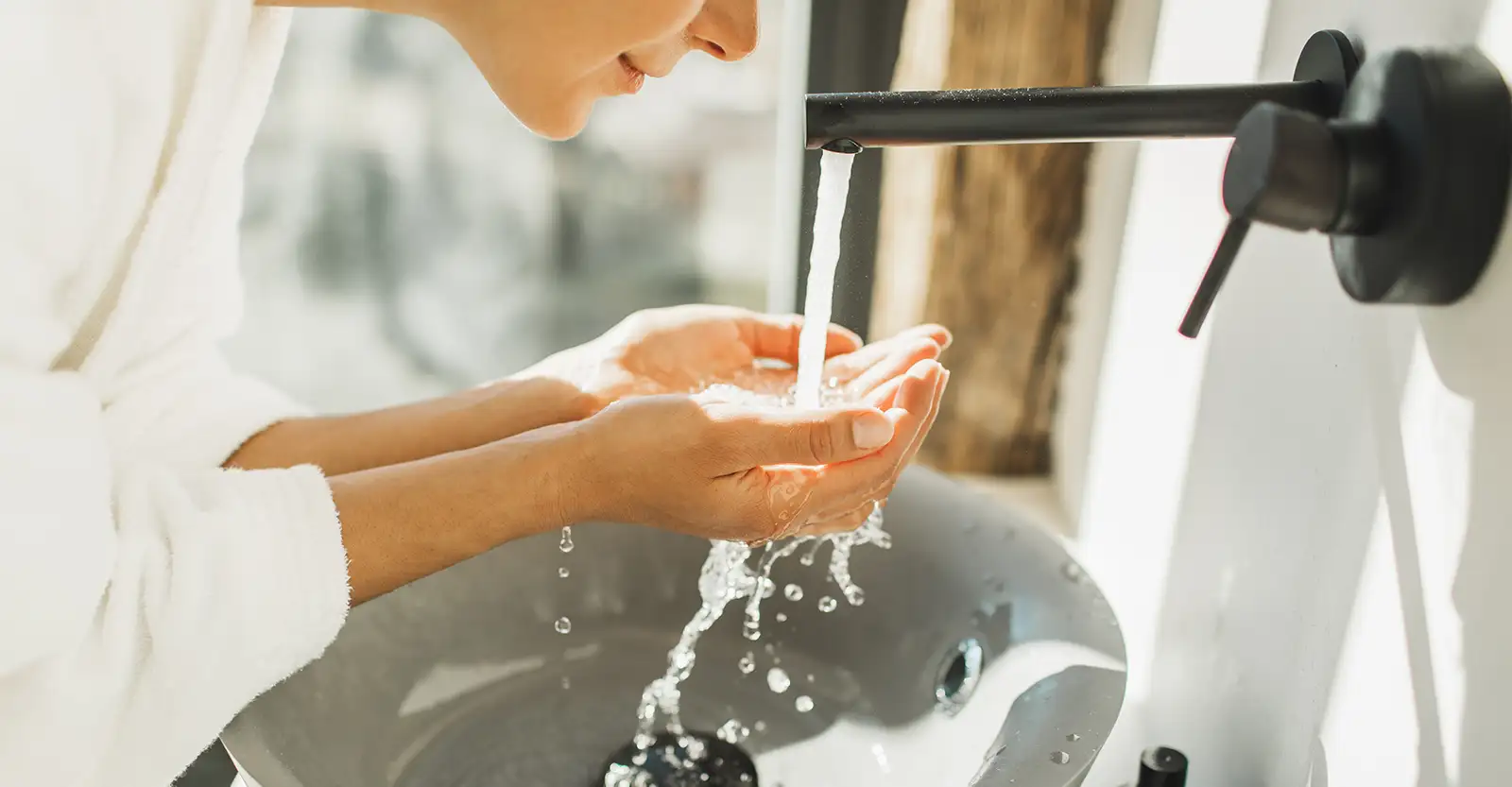
- Sometimes, cleansing with just water is sufficient, depending on your skin type.
- Where possible, aim to choose products with fewer plastic ingredients (e.g. “phthalate-free”) and less plastic packaging. While this can sometimes be difficult to detect, there are tools available to provide more clarity (see point 4).
2. Choose lower-plastic alternatives where possible
When replacing products, consider alternatives that use fewer plastics or simpler ingredients.
Examples include:
- Choosing products packaged in glass, aluminium or other non-plastic materials where possible.
- Avoiding unnecessary free samples wrapped in plastic.
- Using natural cleansers and moisturisers made with ingredients such as oils, glycerine or beeswax.
- Choosing natural exfoliants, such as coffee grounds, oatmeal, sugar, clay or walnut husk, instead of products containing plastic microbeads.
Before trying any new skincare product, test it on a small patch of skin first to check for irritation or allergic reactions.

3. Protect yourself from the sun beyond sunscreen
Sun protection should always be tailored to your skin type, where you live and how much time you spend outdoors.
Whenever possible, prioritise physical forms of sun protection, including:
- Staying in the shade.
- Avoiding the sun during peak UV periods.
- Wearing a wide-brim hat.
- Wearing protective clothing.
Sunscreen remains an important part of sun protection when these measures are not practical or sufficient. Where appropriate, mineral sunscreens containing zinc oxide or titanium dioxide may have a lower environmental impact than some conventional formulations.
4. Use tools to make informed choices
Consumers can also use resources to better understand product ingredients and compare environmental impacts, including:
- Ingredient-scanning apps, such as Plastic Free Future (developed with support from the UN) and Beat the Microbead. Other commonly used apps include Yuka and Think Dirty.
- Product environmental rating systems, such as EcoBeautyScore.
5. Healthcare professionals can help drive change
Dermatologists and other health professionals have an important role to play by:
- Promoting simple, evidence-based skincare.
- Working with companies to encourage safer ingredients and less plastic-intensive packaging.
- Advocating for healthier and more sustainable product design.
6. Support stronger regulation and safer product design
Individual choices are important, but systemic change is essential, including:
- Improving safety assessments of ingredients.
- Phasing out harmful chemicals in personal care products.
- Supporting better recycling, waste management and environmental clean-up systems.
- Encouraging the development of safer formulations and safe and sustainable packaging.
There are already signs that the personal care industry is beginning to shift in response to changing consumer expectations.
According to Booksy, the industry is entering what it describes as a “Great Recalibration”, with consumers placing greater value on science-backed products, transparency and environmental responsibility than on fleeting beauty trends.
As people become more discerning about the products they apply to their skin, there is another consideration worth adding to the conversation: plastic-associated chemicals and particles.
And as research into plastics and human health continues to evolve, one message is already becoming clear.
Simple, evidence-based skincare routines, greater ingredient transparency and safer packaging all have an important role to play in reducing unnecessary exposure to plastic.
But while individual choices matter, lasting change will depend on continued research, stronger regulation, safer product design and greater transparency across the personal care industry.
Subscribe to enews
Want to stay in the loop on our Impact Mission, Communities, Gender Equality, and Natural Ecosystems work? Subscribe to our newsletter.
By signing up with your email, you agree to Minderoo Foundation’s Privacy Policy.