From morning runs to school pick-ups and Sunday errands, activewear has become an everyday staple. But behind the stretch and stain resistance may sit a class of chemicals linked to growing health concerns.
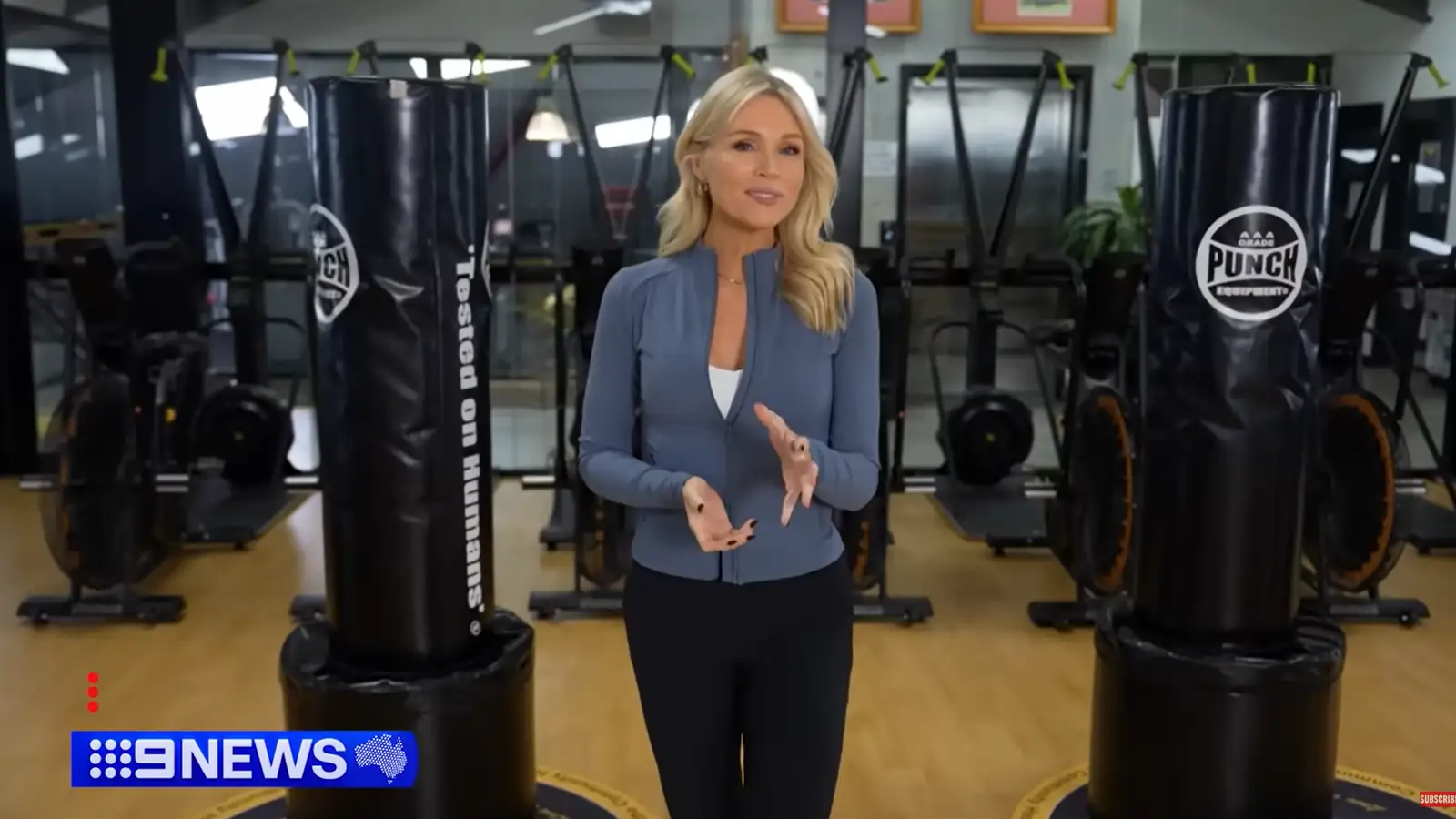
Caption: Is your activewear making you sick? | 9 News Australia. Credit: 9News Australia.
Fashion, by nature, is cyclical.
Trends that disappear for decades eventually find their way back into our wardrobes. Over the last several years, the nineties and early 2000s have steadily resurfaced after something of a 20-year hiatus.
Back then, athleisure looked very different.
It was giving more cotton, and less... flammable.
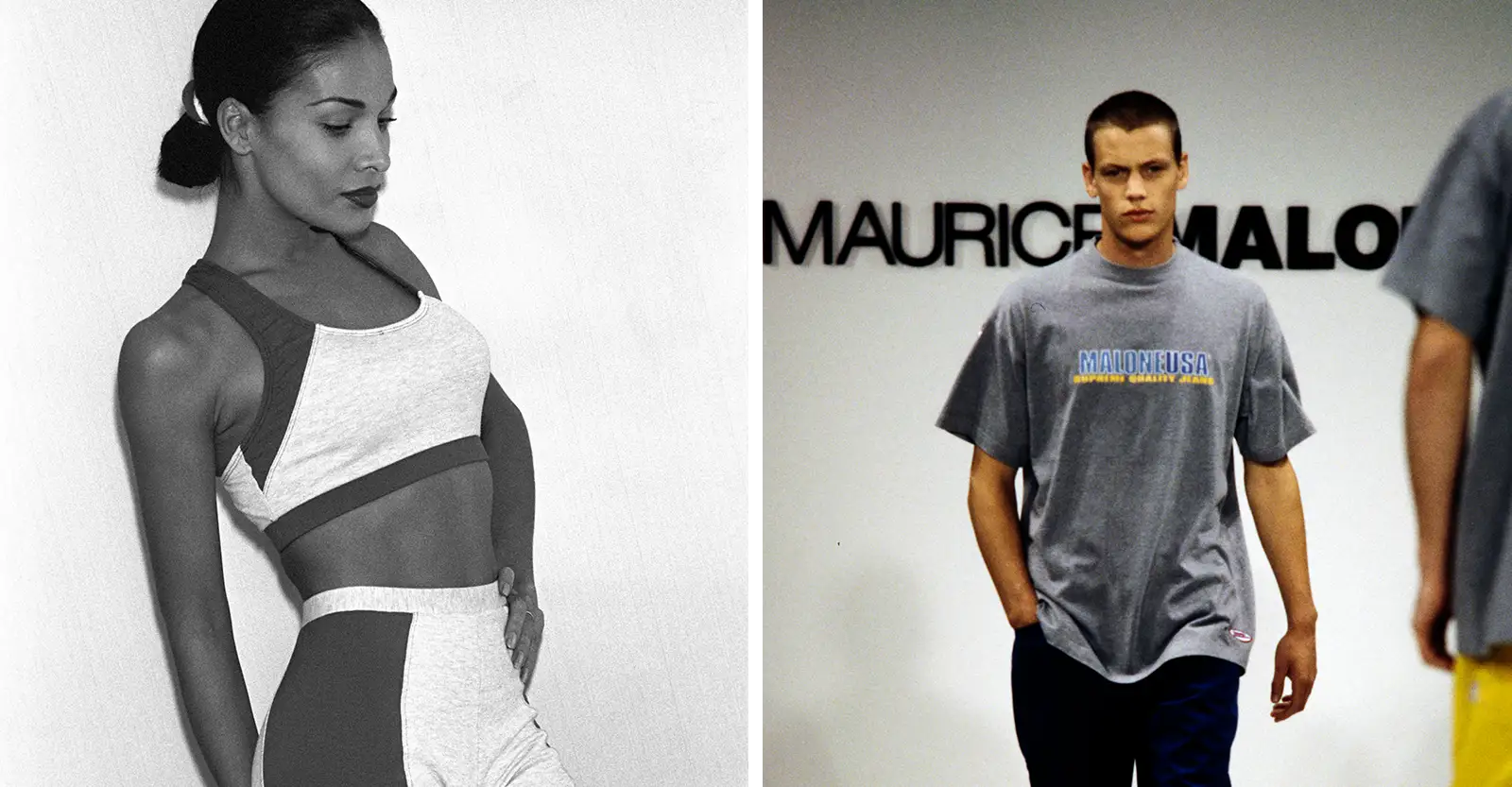
Today, activewear has become a staple of just about everyone’s wardrobe, suited just as much for errands and lounging as it is for exercise.
But the natural fibres of which it was once constituted are now much harder to come by. Perhaps that changed when brands like Lululemon redefined what activewear could be.
By the mid-to-late 2000s, yoga pants had become more than workout gear. They were quickly becoming school pick-up pants, coffee pants, airport pants.

At the same time, advances in synthetic fabrics made activewear softer, stretchier and more durable, while wellness culture accelerated through celebrity influence, social media and fitness trends like Pilates and F45 into the 2010s.
Then came 2020.
As lockdowns blurred the boundaries between work, leisure and exercise, activewear became less of a trend and more of a uniform.
Meanwhile, trend cycles shortened. What once took decades to return can now leave and re-emerge within years, driven by rapid production, constant visibility and life online.
And yet, activewear barely moved an inch. Instead, it became a mainstay, with production and consumption increasing year on year.
It is not hard to see why. Soft, stretchy, moisture-wicking and often water- or stain-resistant, activewear is designed for convenience.
But what gives fabrics those qualities? In many cases, plastic chemicals. And so, with convenience can come trade-offs.
In 2023, Lululemon stated that it phased out the use of PFAS, particularly within a water repellent range—chemicals that had previously been used in a small percentage of its durable water‑repellent products. Claims such as “water resistant”, “odour resistant” and “stain resistant” can often signal the presence of PFAS coatings.
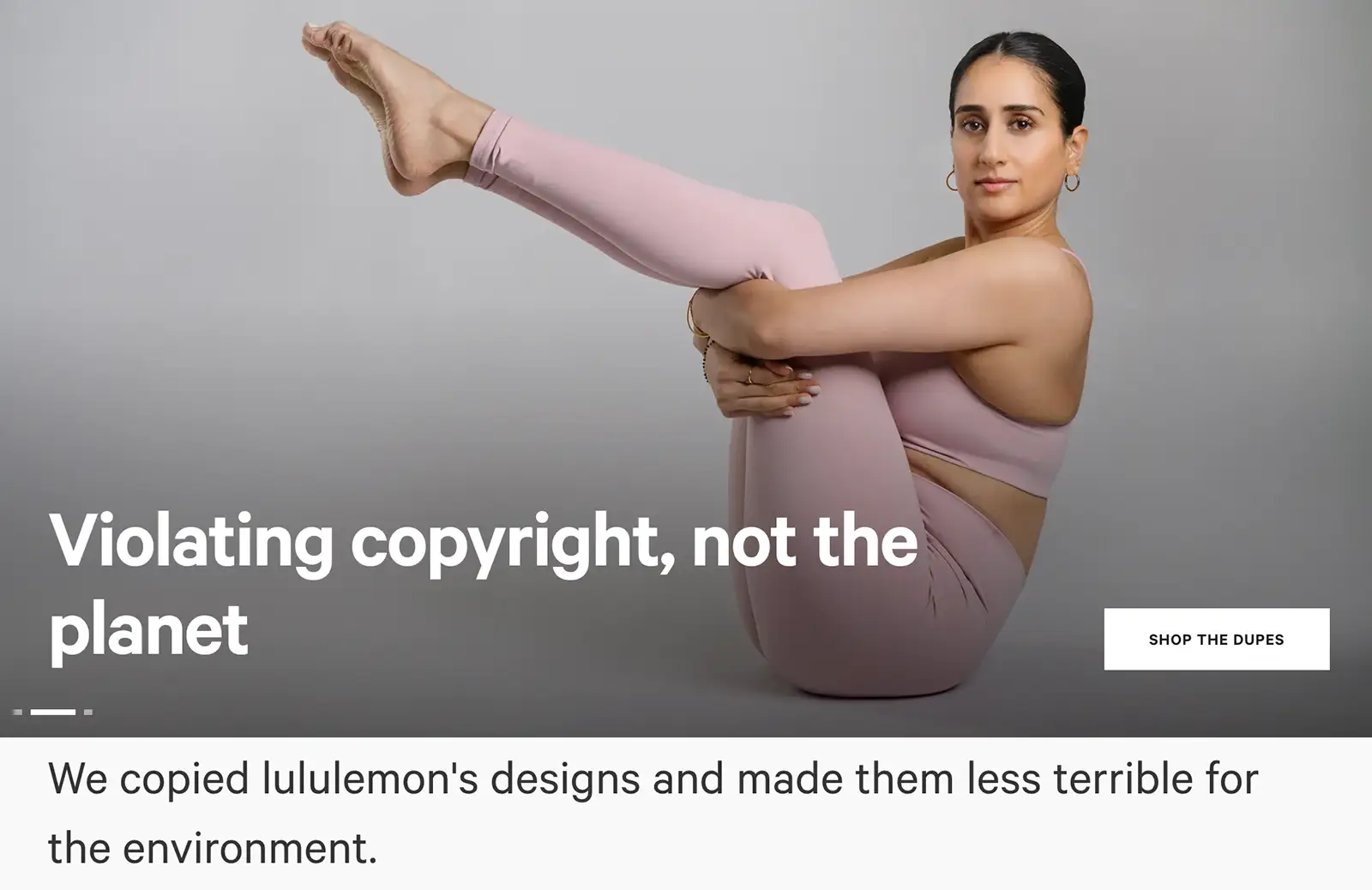
Lululemon has since faced backlash, including from the Mumumelon campaign, intended to signal how much better their products could be for the environment.
According to Mumumelon's website, all of the imitation brand’s products are cut, sewn and printed in factories that use 100% renewable electricity, both in the UK and in Pakistan.
The same brand also has activewear garments that are 100% organic cotton, certified by GOTS (Global Organic Textile Standard), signalling negligible levels of PFAS and other chemicals.
This serves as proof that activewear brands have the ability to produce safe products when done right.
PFAS are a large group of more than 15,000 human-made chemicals commonly used to repel water, grease and stains.
Because the bond between carbon and fluorine is extraordinarily strong, PFAS do not readily break down in the environment or the human body, earning them the nickname “forever chemicals”.
As Dr Sarah Dunlop explains, they are among the strongest chemical bonds known to science.
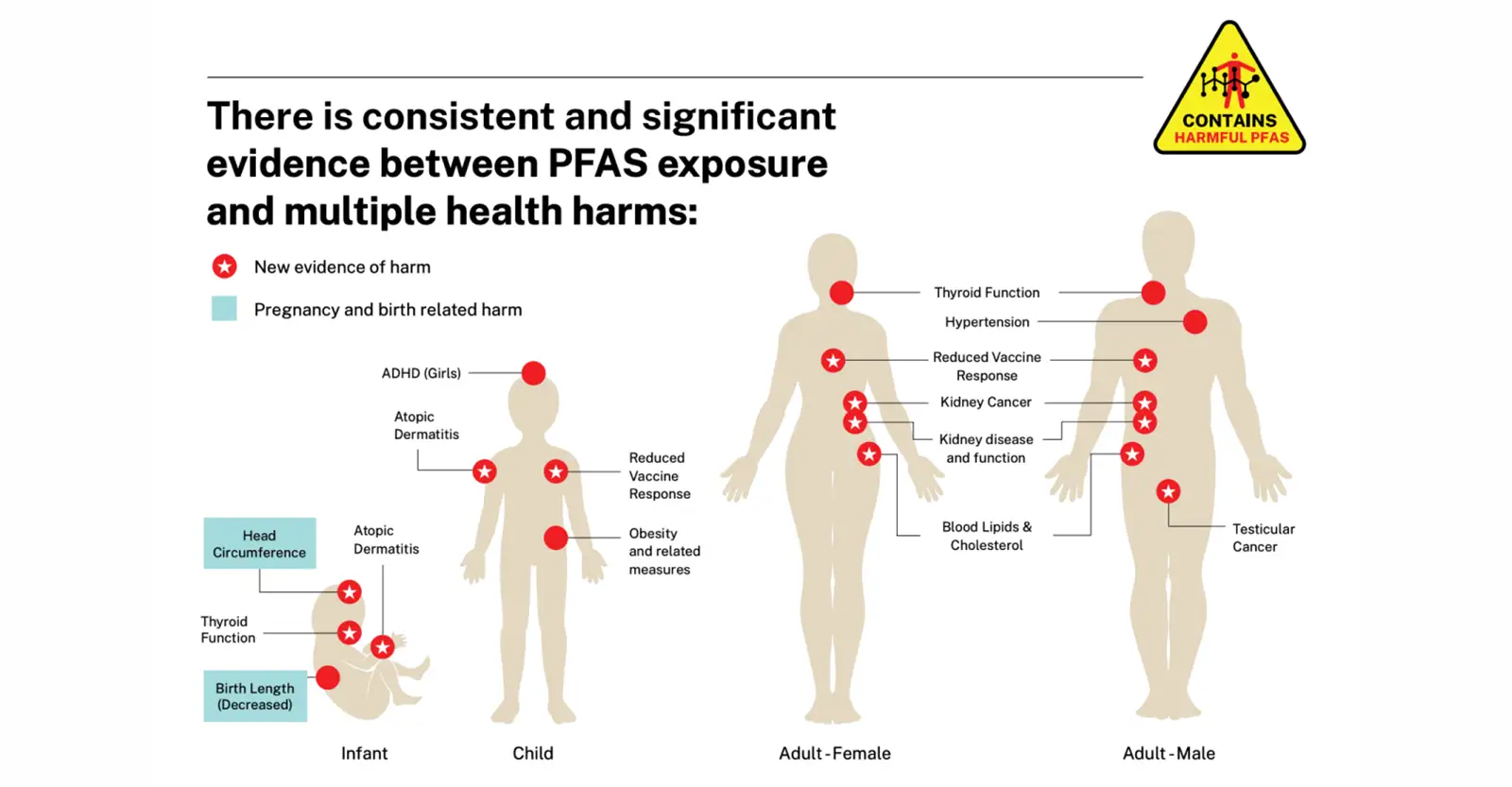
What is more concerning is that PFAS exposure has been linked to a growing range of health concerns.
But PFAS are only part of the story.
As Dr Sarah Dunlop explained to 9News:
“We are clothed in chemicals. Chemicals can be sprayed onto fabrics – and that could be natural ones such as cotton, and also the synthetic ones, including polyester and the suchlike.”
In other words, it is not simply PFAS we should be thinking about when it comes to the clothes on our backs.
Synthetic fabrics, such as polyester and elastane, are plastics themselves. This means they can release a variety of other chemicals as well.
For PFAS and plastic chemicals to be in our clothing is a big problem, because they can be absorbed directly through the skin.
When asked about the relationship between plastic chemicals and fertility, Dr Sarah Dunlop noted that while PFAS have been linked to harms such as kidney and testicular cancer, other chemicals used in clothing may also contribute to reproductive health concerns, including links to fertility challenges and conditions such as PMOS (Polyendocrine Metabolic Ovarian Syndrome, previously PCOS, Polycystic Ovary Syndrome).
PFAS exposure commonly occurs through products such as:
- Non-stick cookware
- Plastic food packaging
- Grease-resistant food packaging (including some paperboard packaging)
- Water- and stain resistant coatings for clothes, furniture, carpets and car seats
- Cosmetics
- Adhesives and sealants
And yes, potentially your activewear too.
While any of your clothes might be coated with PFAS, activewear is of particular concern because, being synthetic, it also contains many other different chemicals. It clings closely to the skin, and we get hot and sweaty in it at the gym. It just so happens that friction, heat and perspiration speed up the absorption of these chemicals through the skin.
(Sometimes it feels like we just cannot have nice things.)
PFAS specifically is found in a lot of babies’ and kids’ clothing, including school uniforms, which is concerning given that young children are a lot more vulnerable to chemical exposures.
Below are just some of the health harms researchers have linked to PFAS exposure across the lifecycle.
Reducing exposure does not mean throwing out your wardrobe.
But where possible, consider limiting synthetic fabrics and opting for natural fibres such as cotton, hemp or wool.
Think fewer “performance” coatings and adopt more of a “could it have existed in 2000?” mindset.
(Not every trend deserves a comeback.)
Another helpful tip: When shopping for activewear, on top of searching for natural fibres, look for clothing with certifications such as ‘OEKO-TEX’, ‘GOTS (Global Organic Textile Standard)’ or ‘Bluesign’ on labels, which signal lower chemical risk. Some activewear brands even do both.
To learn more about the five chemicals of concern, visit: www.globalplastictreaty.com/human-health
There, you can explore where plastic chemical exposure occurs, what the research says about potential health impacts, and practical ways to reduce your exposure.
In April 2026, Lululemon addressed that their products are now free from PFAS, and they continue to work closely with industry partners and third-party experts to ensure its products are safe and of the highest quality.
Sources
- Bisphenols in daily clothes from conventional and recycled material: evaluation of dermal exposure to potentially toxic substances. Jurikova, M. et al. Environ Sci Pollut Res 31, 55663–55675 (2024). https://doi.org/10.1007/s11356-024-34904-4
- Per- and Polyfluoroalkyl Substances in North American School Uniforms. Chunjie Xia et al. Environmental Science & Technology 2022 56 (19), 13845-13857 DOI: 10.1021/acs.est.2c02111
- Sweat-amplified dermal transfer and combined toxicity of per- and polyfluoroalkyl substances and organophosphate esters mixtures in children's textiles Keyi Li et al. Science of The Total Environment, Volume 1000, 2025, 180426, ISSN 0048-9697, https://doi.org/10.1016/j.scitotenv.2025.180426