As evidence grows about the impacts of plastics on human health and the environment, researchers are exploring edible and compostable alternatives that could help reduce our reliance on conventional plastic packaging. Here’s what the latest science tells us.
Plastics have become so embedded in our everyday lives that it can be difficult to imagine an alternative capable of matching their convenience, versatility and scale.
Yet beneath that convenience lie two significant challenges: their impact on both the environment and human health.
The environmental consequences are well documented. Plastic pollution has been found everywhere from the deepest ocean trenches to glaciers and mountain peaks, harming wildlife and disrupting ecosystems around the world.
At the same time, a growing body of research is revealing the risks plastics and the chemicals they contain may pose to human health across their lifecycle.
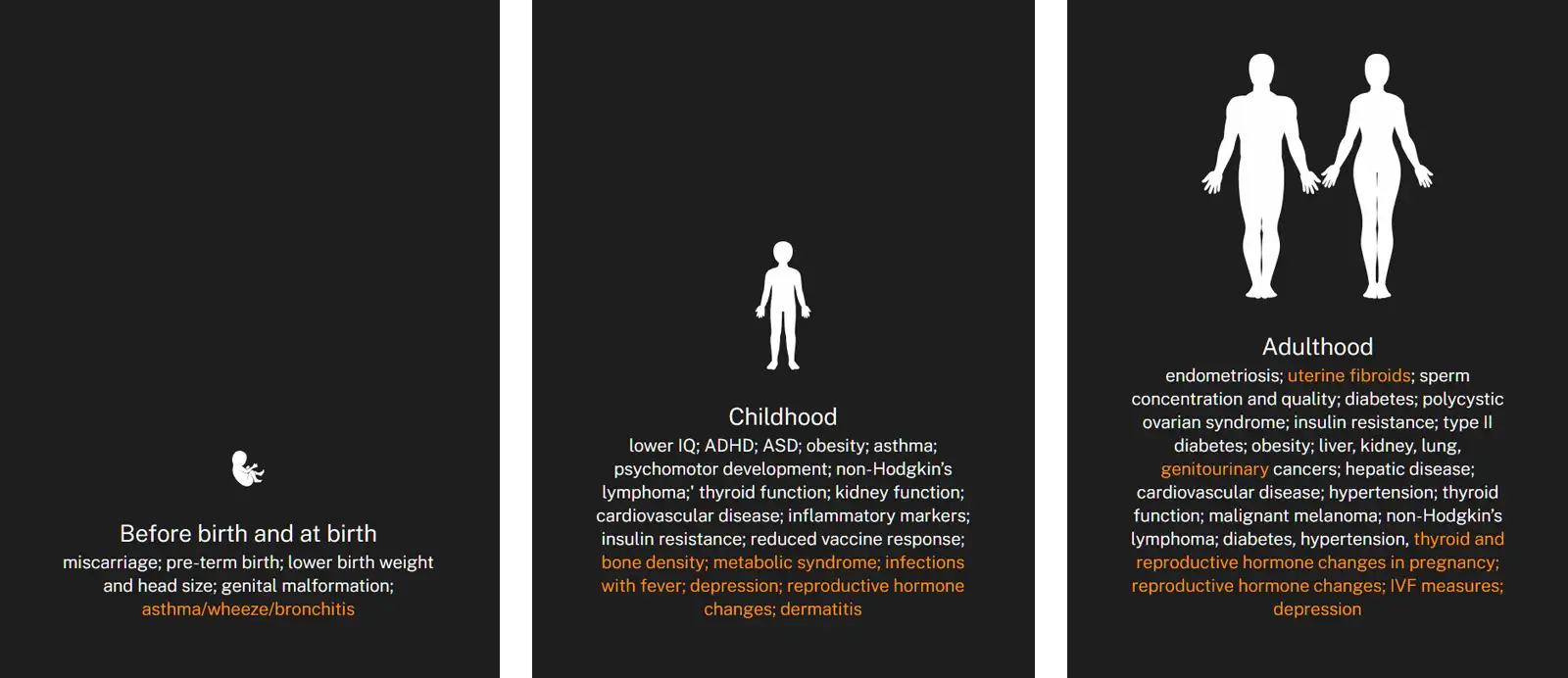
Studies have linked exposure to a range of adverse health outcomes, including lower birth weights in newborns, neurodevelopmental disorders in children and several cancers in adults, among a host of other potential health harms as outlined in the figure below.
The health impacts affect all stages of life, and include:
So why haven’t we moved beyond plastic?
The answer is complex.
Decades of investment have made plastic one of the world’s cheapest and most established materials, supported by mature supply chains that are difficult for alternatives to compete with.
As the global energy transition reduces demand for fossil fuels, plastics are being viewed as an important long-term market for the petrochemical industry.
But if the materials we rely on every day continue to raise concerns for both people and the planet, exploring safer alternatives becomes increasingly important.
We are actively researching and investing in the development of safe and sustainable alternative materials to plastic, including:
- investing in businesses that bring safer solutions to market
- supporting scientific research to overcome technical barriers in promising new materials,
- generating data-driven insights to guide innovation and policy.
One of the greatest opportunities lies in food packaging, because we know a major source of our exposure to plastic chemicals is through our diet.
Around 40 per cent of all plastic produced globally is used for packaging, much of it designed to be used only once before being discarded.
If we can rethink how food is packaged, we have an opportunity to address one of the largest sources of plastic waste.
And given that food packaging comes into direct contact with what we eat, it is important that packaging does not expose people to chemicals at levels that may harm human health.
After all, food packaging should protect both food and those who eat it.
A new scientific review led by Minderoo examined the performance, safety and end-of-life behaviour of edible films and coatings across different food-packaging applications.
It found that these materials could help reduce conventional plastic use in selected applications, while also identifying important technical, safety, regulatory and infrastructure challenges that must be addressed before wider adoption.
The idea is for thin, flexible materials to act as protective layers for food, replacing some conventional plastic packaging.
Some are designed for human consumption, and others for composting, while some aim to do both.
However, these claims require evidence.
Before we continue, we must distinguish between edible, compostable and biodegradable materials, as these terms are not interchangeable.
An edible material is intended to be safely consumed, but it is not necessarily compostable.
Similarly, a compostable material is not necessarily safe to eat, while biodegradability depends on the environmental conditions and timeframe in which breakdown occurs.
Edible products:
- Must be assessed for dietary exposure, allergenicity, additives, processing by-products and long-term safety.
Compostable products:
- Must demonstrate complete breakdown within a specified timeframe under clearly defined conditions, without leaving harmful residues.
- Claims must specify the conditions and timeframe required for breakdown, as compostability is not a universal property.
- The environmental benefits also depend on appropriate collection, waste separation and access to suitable composting infrastructure.
Biodegradability:
- Can be broken down by living organisms, such as bacteria and fungi, into substances like water, carbon dioxide, and biomass under specific environmental conditions.
- The term “biodegradable” alone does not indicate how quickly or under which environmental conditions this will occur.
It’s important to note that no single material is likely to provide a perfect replacement for every plastic application.
Different materials perform differently, meaning the question isn’t simply:
“What can replace plastic?”
Instead, it’s:
“Which material is best suited to each application?”
While these materials are still in development and each has limitations, many show real promise across different food applications.
The following examples show where edible-compostable materials may have potential.
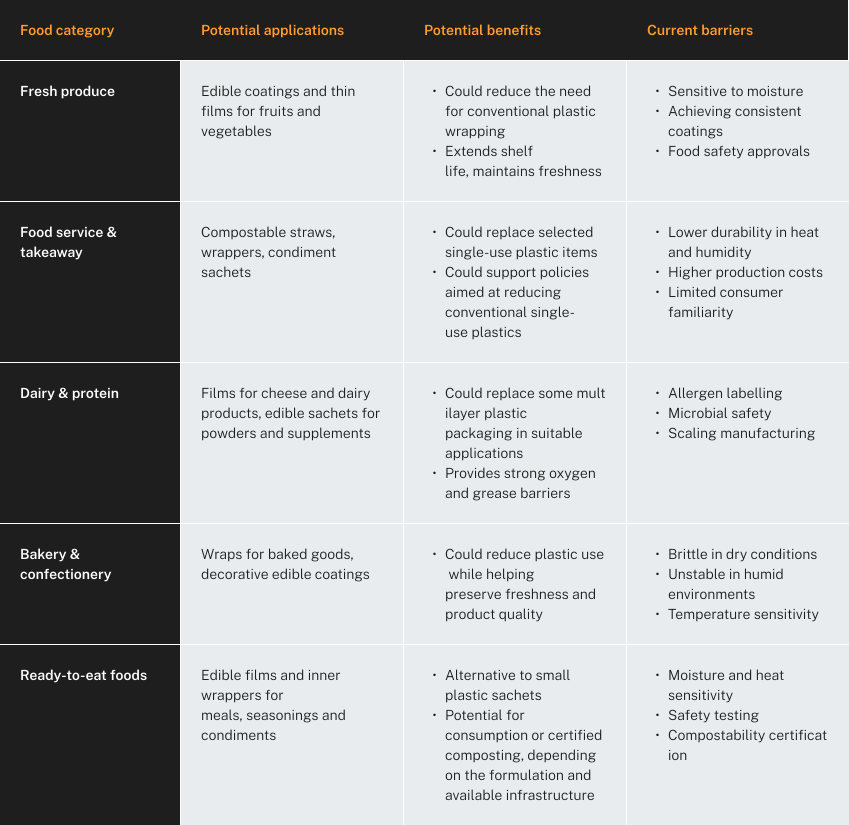
The review found that the most promising approaches combined complementary materials.
These combinations may include:
- polysaccharides (such as starch, cellulose, alginate and chitosan)
- proteins
- lipids and natural waxes
- reinforcing materials (such as nanocellulose)
Combining these components can improve strength, flexibility and resistance to moisture or oxygen.
Encouragingly, some edible films and coatings have progressed to pilot-scale testing or early commercial use.
But while these solutions demonstrate promise, they are not a universal replacement for conventional plastic.
Their most realistic near-term role is being available in selected food applications where the properties of the material match the required shelf life, moisture resistance, mechanical performance and end-of-life pathway.
Bringing these alternatives into the mainstream will require:
- robust safety standards
- transparent disclosure of ingredients
- verified compostability claims
- appropriate waste-management infrastructure
- stronger policy and regulation
- greater consumer awareness.
The future of food packaging won’t depend on a single material replacing plastic.
It will depend on designing smarter packaging systems that protect food, reduce waste and minimise the risks that plastics and their associated chemicals pose to both human health and the environment.
Subscribe to our newsletter
Keep up to date on our Impact Missions, including AI, alongside our Communities, Natural Ecosystems, and Gender Equality work.
By signing up with your email, you agree to Minderoo Foundation’s Privacy Policy.