Four years on from Russia’s full-scale invasion, the people of Ukraine continue to persevere, restore and rebuild in the face of ongoing adversity.
When conflict breaks out, rebuilding is often imagined as something that happens once the fighting stops.
But in Ukraine, recovery has already begun.
Since Russia’s full-scale invasion, the country has suffered extensive damage to infrastructure, significant civilian casualties and widespread displacement. Many areas remain contaminated by explosive remnants of war, while disrupted agricultural production continues to threaten livelihoods and food security.
Yet despite ongoing strikes and instability, communities are choosing to stay, rebuild and invest in the future of the places they call home.
To those watching from afar, it can be difficult to understand why they would remain in harm’s way.
But recovery often starts – and perhaps must start – before conflict ends.
For Anastasiia Bilchenko, Partnerships Officer at our partner organisation, Peaceful Heaven of Kharkiv, the reason for staying is simple.

“These communities are their homes. And their lands, houses, livelihoods, families, and histories are deeply connected to these places. So, while some people have nowhere else to go, others consciously choose to stay because they believe in the future of their communities.
Despite having the opportunity to remain safely in Estonia after completing her master’s degree and working at the Ukrainian Embassy supporting displaced persons, Anastasiia chose to return home.
Today, she lives and works just hours from the Russian border, where regular air alarms and ongoing security risks are part of daily life. She returned to Ukraine because she believed her skills could make the greatest difference where they were needed most – alongside the communities she calls home.
Her story is emblematic of thousands of Ukrainians making the same choice.
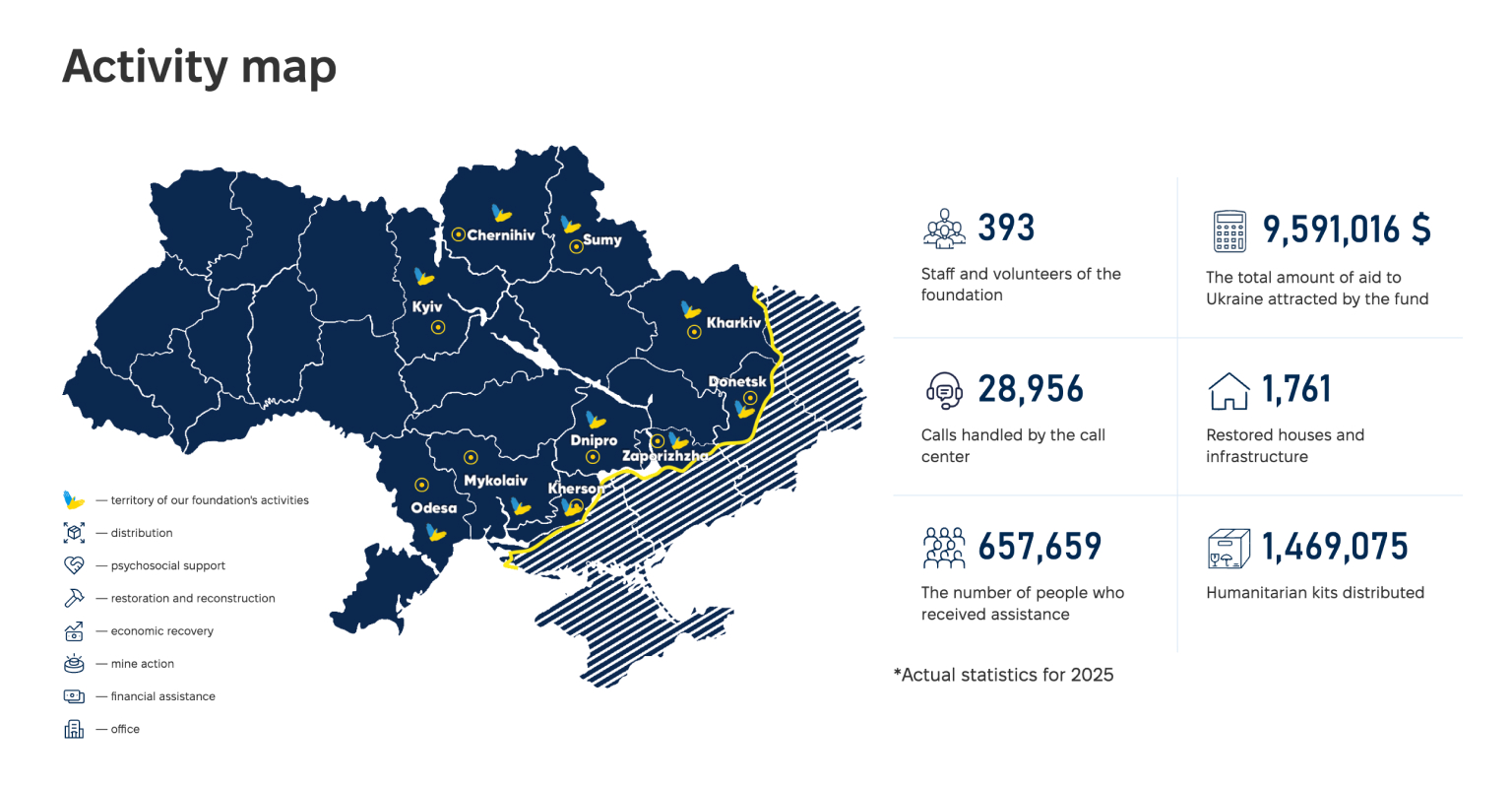
Peaceful Heaven of Kharkiv is one of many grassroots organisations responding to the evolving needs of communities affected by the war. Its work spans emergency relief, infrastructure recovery, food security, livelihoods, psychosocial support and humanitarian assistance.
Beginning with the distribution of hot meals in 2022, the organisation has grown from an emergency response into a network of 393 employees and volunteers supporting long-term food security and economic resilience.
While the foundation works across multiple humanitarian sectors, its primary focus is food security and livelihoods, protection, and shelter.
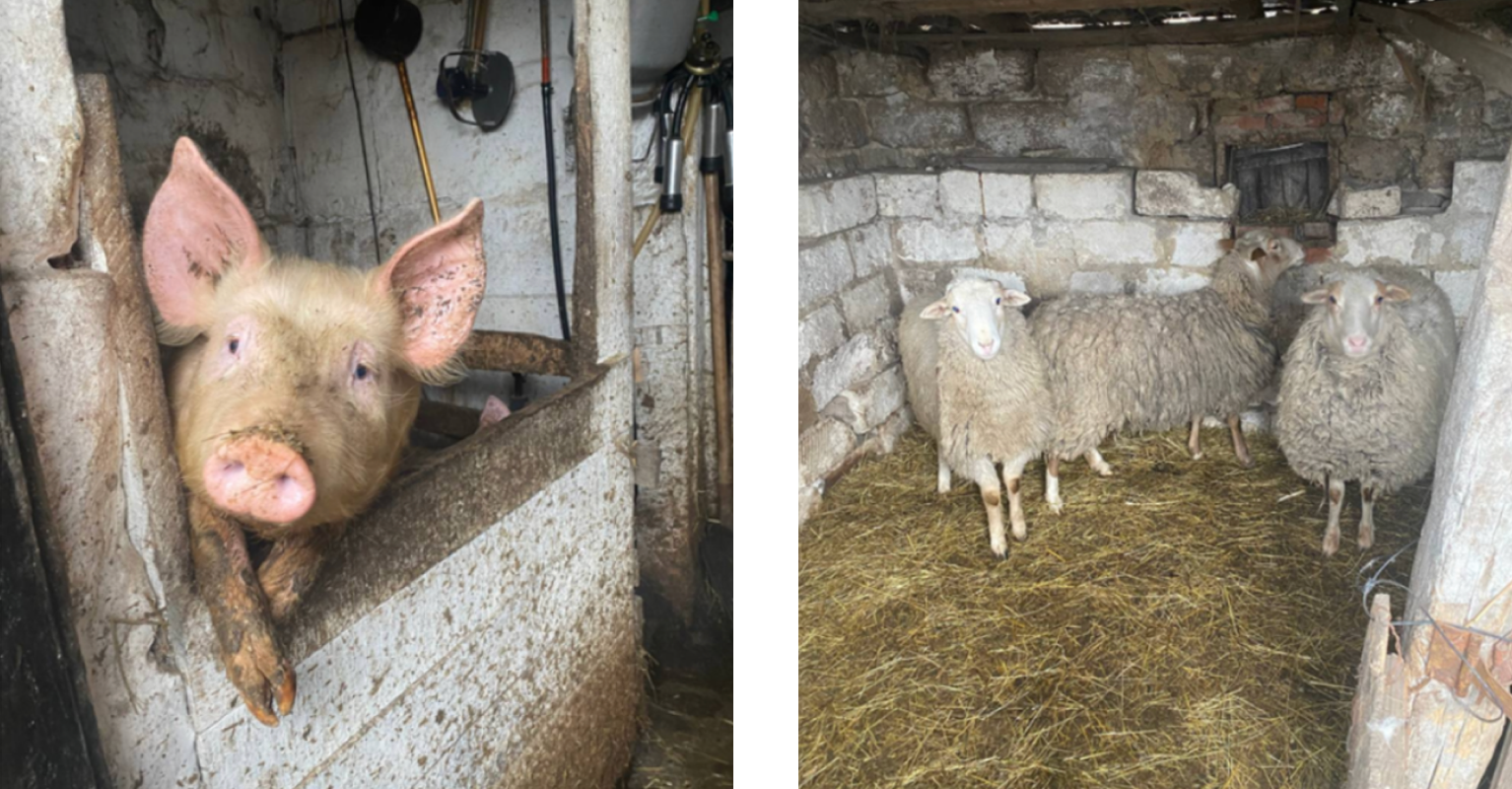
The war has damaged farms, equipment and irrigation systems, while reducing access to seeds and fertilisers. For households that rely on agriculture, rebuilding livelihoods has become just as important as meeting immediate needs.
Since mid-2025, Minderoo Foundation has supported Peaceful Heaven of Kharkiv to help vulnerable households across Kharkiv and Sumy restore agricultural livelihoods through humanitarian and technical assistance.
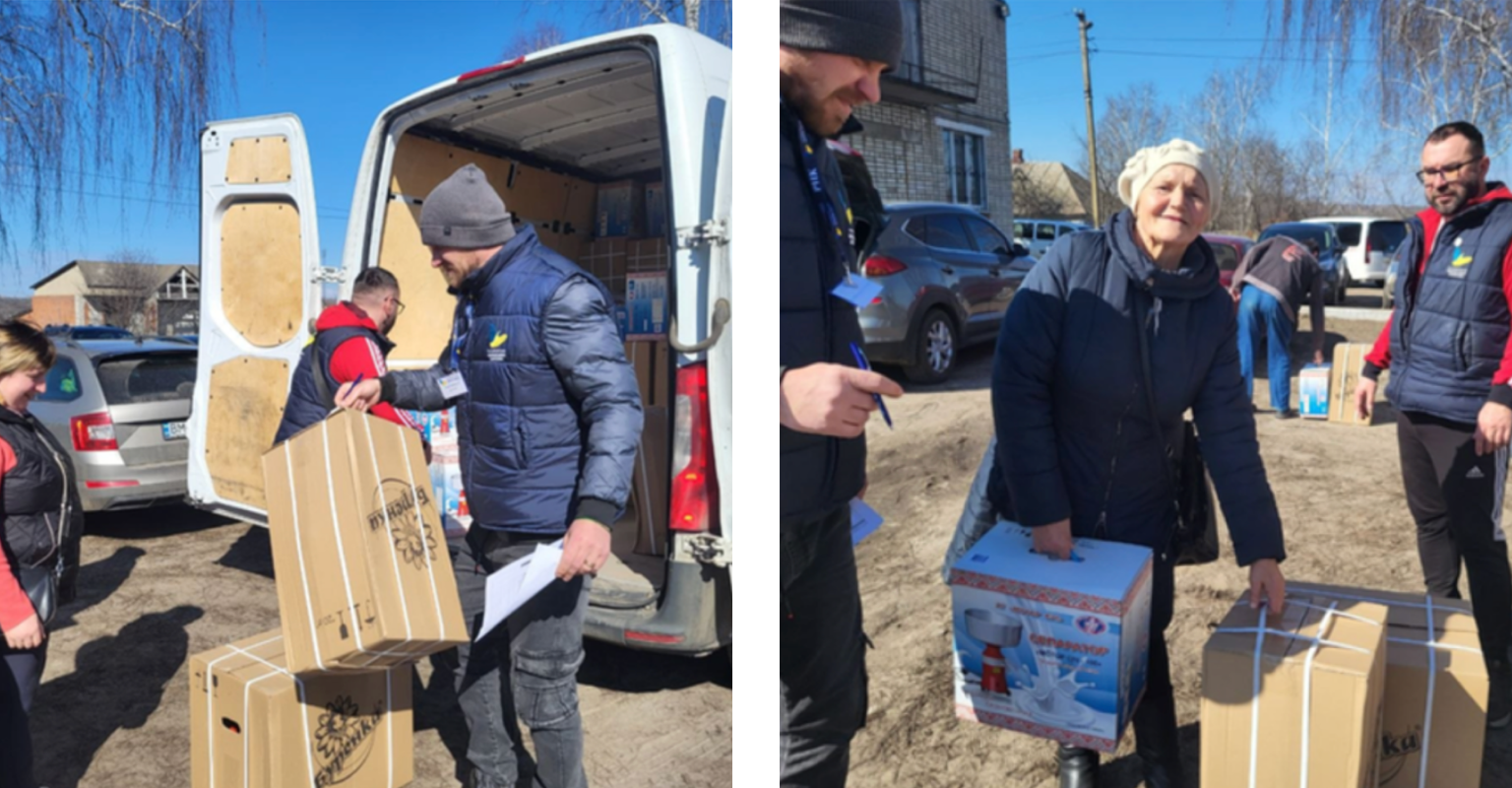
Support begins by understanding each family’s circumstances before tailoring assistance to their needs through agricultural kits and technical support.
For Anastasiia, however, the value of this work extends far beyond the equipment itself.
“For many families receiving equipment, it represents an opportunity to become economically active again. So it restores dignity, confidence and hope. People move from depending entirely on assistance of food products to earning an income and planning for the future.
In this way, dignity often matters as much as survival.
As Anastasiia reflects:
What began with hot meals has evolved into agricultural kits, equipment and livelihood grants that help restore independence alongside food security.
And when one family regains the ability to support itself, the benefits often extend far beyond the household, strengthening the wider community.
Hope is found in ordinary people choosing to keep going.
Families staying because it is home. Farmers planting again. Neighbours supporting one another. Local organisations continuing to plan for the future.
When asked what she wished people outside Ukraine understood about living through an invasion, Anastasiia reflected:
“Like many Ukrainians, our team members have experienced uncertainty, including loss and significant other challenges over the past year. So, working in this environment can be emotionally demanding. But at the same time, it has reinforced our sense of purpose and responsibility.
For those living in Ukraine, life continues, even when the conditions for living safely do not.
Importantly, that recovery is being shaped by the people living it every day.
Throughout our conversation, Anastasiia repeatedly returned to the importance of listening, conducting needs assessments and responding to what local people identify as their greatest priorities.
Recovery is often imagined as something that begins once the fighting stops.
But in Ukraine, communities cannot afford to wait.
Every day, local organisations are restoring livelihoods, strengthening food security, rebuilding connections and creating the conditions for people to remain where generations of their families have lived.
Their work reminds us that recovery is not simply about repairing what has been damaged. It is about protecting the future while it is still being shaped.
By backing local leadership, we can help ensure Ukraine’s recovery is led by the people who know their communities best.
If you’d like to learn more about the grassroots organisations supporting Ukraine’s recovery, explore this story featuring more of the partners leading this work.
Subscribe to our newsletter
Want to stay in the loop on our Impact Mission work, alongside our Communities, Gender Equality and Natural Ecosystems? Subscribe now.
By signing up with your email, you agree to Minderoo Foundation’s Privacy Policy.