In 2001, the Australian Children’s Trust, now Minderoo Foundation, was founded to improve the lives and wellbeing of children. Twenty-five years on, the scope of our work has expanded, guided by our vision of a society that values all people and natural ecosystems.
From our earliest days, employment was an important part of our work with First Nations communities, connecting people with opportunities, skills and practical support to build economic independence.
Today, First Nations children and families, community and cultural development, and economic independence remain critical priorities. Our approach recognises that these issues are connected. By supporting healthy babies and stronger families and communities, we help build pathways from early childhood through education, training and employment.
As Minderoo celebrates 25 years, we are reflecting on how this work has evolved, from early grants and employment programs to broader partnerships with First Nations-led organisations and communities. Since 2021, we have been proud to commit more than $54 million in philanthropic support to Indigenous-led organisations, programs and initiatives across Australia, making Minderoo one of the country’s largest philanthropic supporters of First Nations communities.
Australian Children’s Trust (Minderoo Foundation): Early Philanthropy | 2001 - 2013
The Australian Children’s Trust began by making grants and donations to organisations in our home state of Western Australia. Its aim was to help all Australians, particularly children and Indigenous Australians, to dream beyond what their circumstances and expectations might allow, and to equip them with the belief to achieve those dreams.
First Nations empowerment was part of this wider philanthropic agenda, but we knew we had to do more. To create lasting change, we had to change the system that creates the conditions of disadvantage.
In 2013, the Australian Children’s Trust became Minderoo Foundation. The name Minderoo comes from the Forrest family’s station and is derived from an Aboriginal word meaning “place of permanent and clean water”.
The Australian Employment Covenant | 2008 - 2013
In 2008, Andrew Forrest and then Prime Minister Kevin Rudd launched the Australian Employment Covenant (AEC), which set out to secure 50,000 job commitments from Australian employers for Indigenous people.

The AEC brought together employers, who pledged the jobs. Government was responsible for delivering the training, job-readiness and placement support needed to fill them. In 2013, through Dr Forrest’s leadership, over 330 employers had committed to more than 61,000 jobs, successfully exceeding the original goal.
The AEC began a national conversation about the role the private sector could play in closing the gap through employment and opportunity. For Minderoo, it marked a significant expansion of our work on Indigenous employment and economic participation.
GenerationOne: A Grassroots Campaign | 2010 - 2018
In 2010, GenerationOne was launched as a national campaign to end disparity between Indigenous and non-Indigenous Australians within one generation.
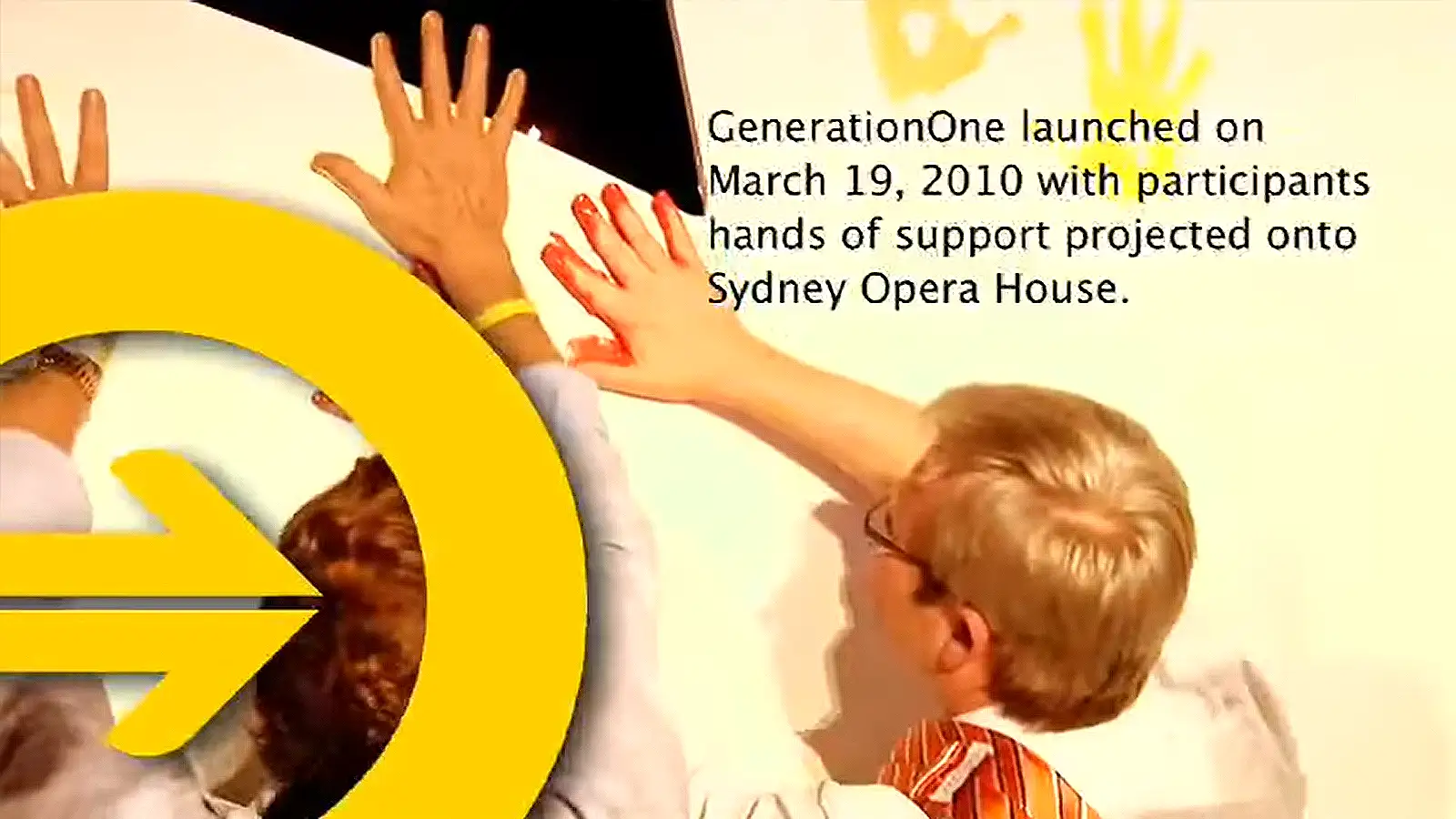
Backed by a privately funded, prime-time television campaign across Australia’s major networks, GenerationOne set out to bring Indigenous disparity to the forefront of the national conversation. It broadened the conversation started by the AEC beyond business, taking the message from boardrooms to kitchen tables and encouraging all Australians to play a part in closing the gap.
Vocational Training and Employment Centres (VTEC) | 2013 - 2022
As employer commitments through the AEC grew, the challenge shifted to meeting demand for job-ready employees.
GenerationOne’s employment model sought to address this by reversing the traditional employment pathway – secure a guaranteed job first, and then job-specific, employer-directed training and support. This prepared jobseekers for long-term employment while building the cultural capability of employers.
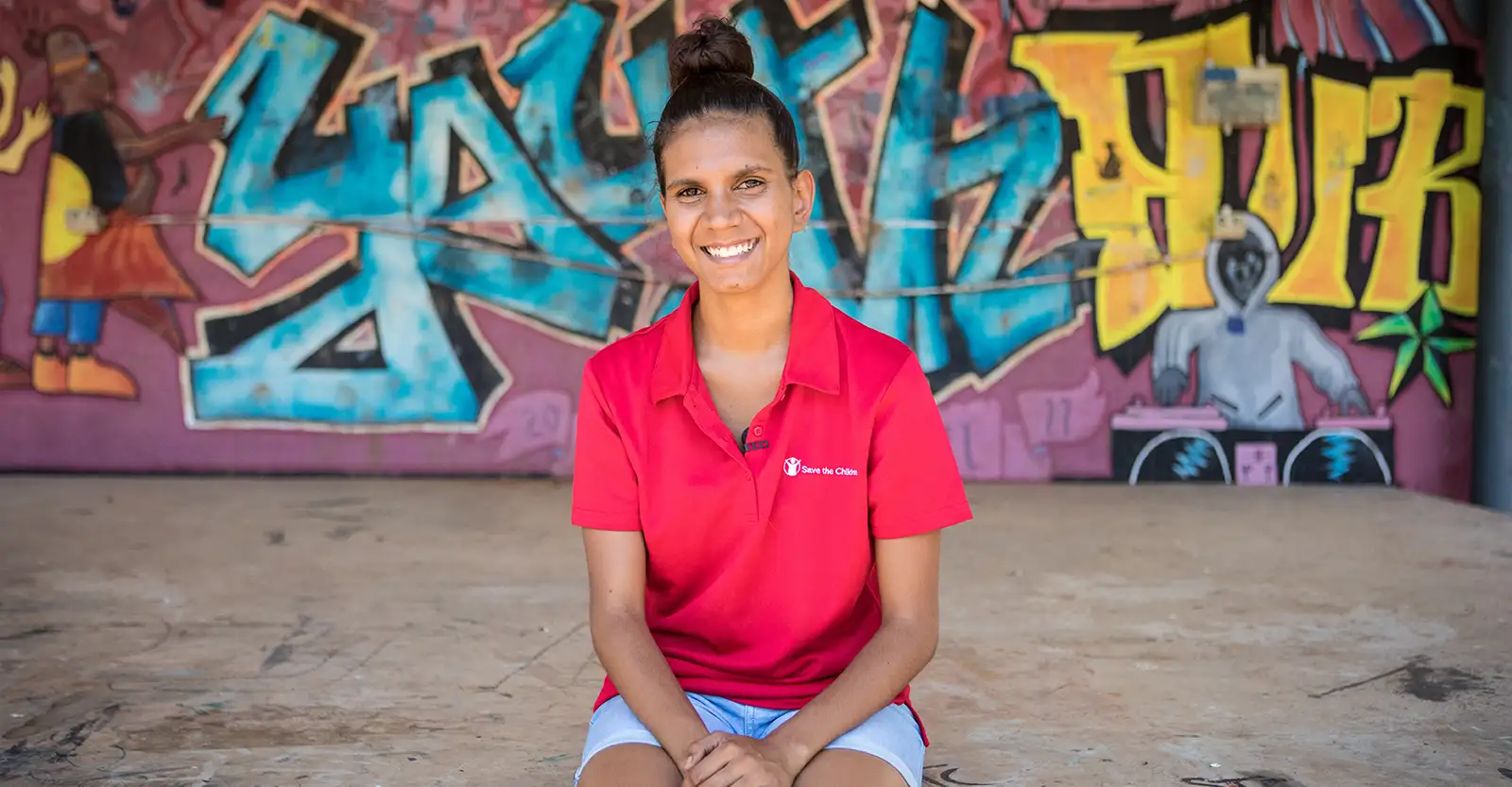
In 2014, the federal government rolled out this model through Vocational Training and Employment Centres (VTECs), which connected jobseekers with guaranteed jobs and supported them into their roles with wrap-around services. At its peak, 29 VTECs operated across Australia, filling thousands of jobs. The framework operated until 2022, when the federal government transitioned to the Indigenous Skills and Employment Program.
For Minderoo, the growth of GenerationOne through the VTECs marked a significant shift towards economic participation and systems reform, focusing on Indigenous employment parity, corporate accountability, employer engagement and workplace inclusion. Public reporting shows that more than 30,000 jobs were filled through programs GenerationOne contributed to and supported.
Creating Parity: the Forrest Review | 2013 - 2014
In 2013, then Prime Minister, Tony Abbott, commissioned Dr Andrew Forrest to review Indigenous training and employment programs. Released in 2014, Creating Parity: the Forrest Review made 27 recommendations aimed at creating parity between Indigenous and other Australians, covering pre-natal services and education, training and employment services, housing and Indigenous land access, and the welfare system – intended to be pursued as a whole.
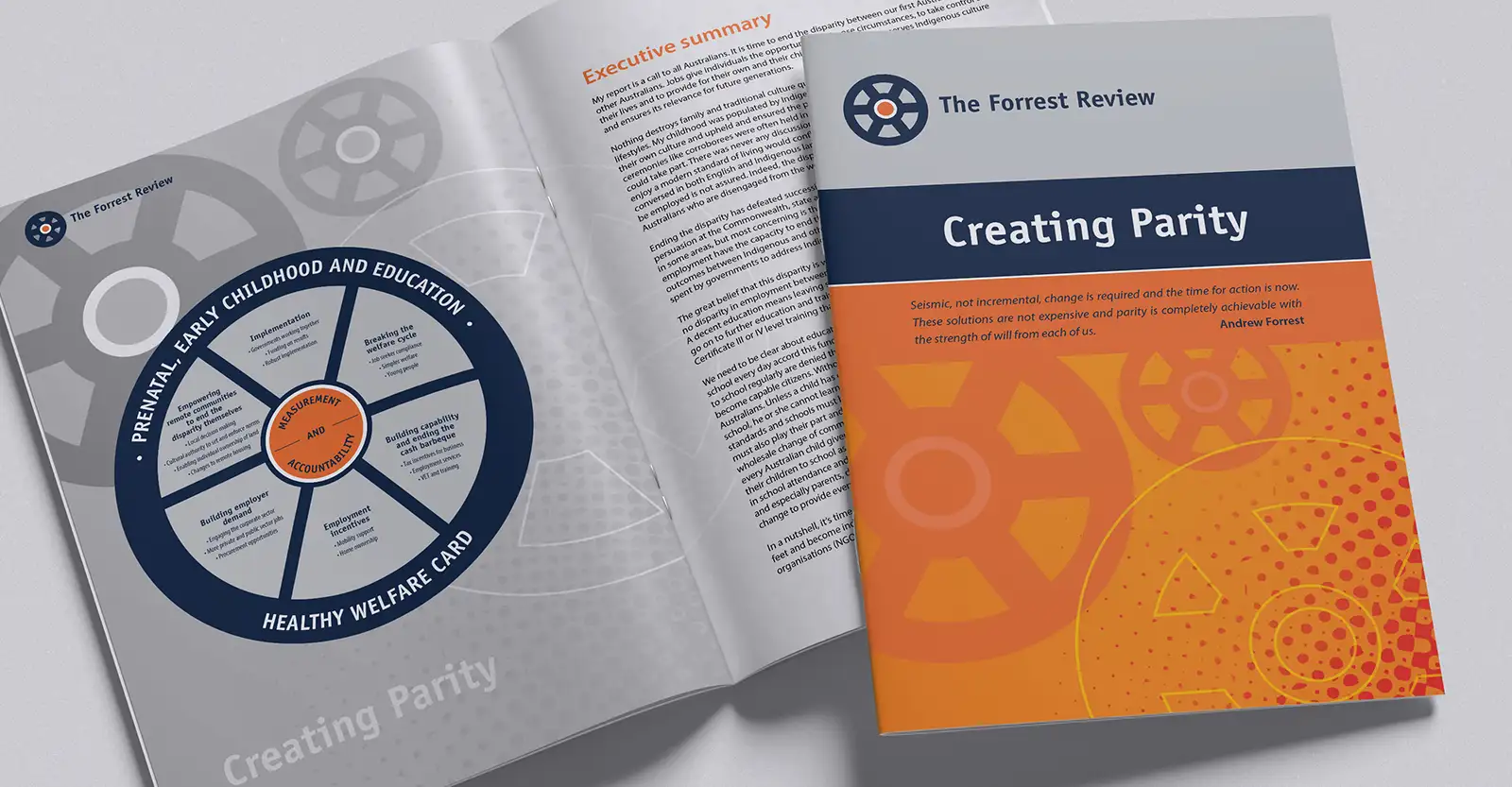
In response, the Australian government made a number of commitments, including leveraging its purchasing power so that 3 per cent of Commonwealth contracts would go to Indigenous suppliers by 2020 and increasing Indigenous public sector employment to 3 per cent. The government also drew on the Review’s recommendations to introduce Cashless Debit Card trials in multiple locations, with GenerationOne supporting engagement between First Nations leaders and communities, financial institutions and government.
Generation One: Economic Empowerment | 2019 – 2023
By 2019, GenerationOne had evolved into a dedicated Minderoo initiative, with the same goal of creating parity with and for Indigenous Australians.
During this period, we backed Dream Summit and Dream Venture, providing capacity-building, commercialisation advice and networking opportunities to First Nations entrepreneurs, helping them bring their visions to life. We also supported Blak Loungeroom, bringing First Nations people working in philanthropy together to help shape the future of First Nations-led giving.
In 2022, to overcome the lack of data on Indigenous workforce participation, Generation One commissioned and launched Australia’s First Nation Employment Index in partnership with Bankwest Curtin Economics Centre and Murawin Consulting, an Aboriginal owned and led consultancy.
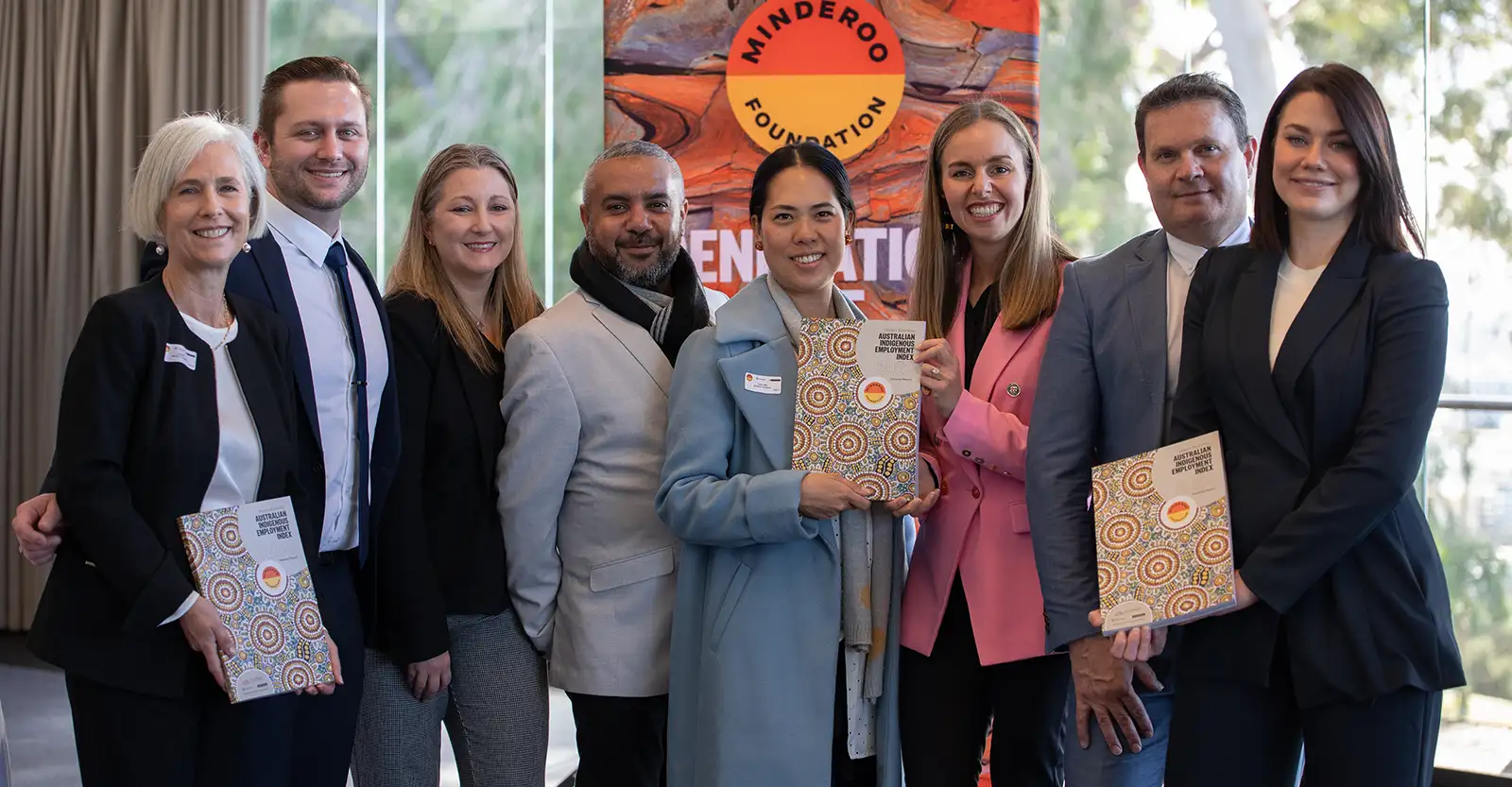
The Index established a baseline for parity among the nation’s largest employers and identified the practices that lead to sustainable employment. It moved beyond simple hiring metrics to examine First Nations workplace experiences, organisational cultural capability, employee retention and progression and sector-wide accountability – a major step for evidence-based approaches to First Nations employment.
Minderoo transitioned stewardship of the Index to the National Indigenous Employment and Training Alliance, a First Nations-led peak body, Murawin and the Social Research Centre. The transition reflects our growing emphasis on supporting First Nations-focused programs that include distributed governance where First Nations organisations lead the shaping and implementation of projects for their communities.
Minderoo Foundation: 2030 Strategy | 2023 to now
In 2023, Minderoo launched the 2030 Strategy, focusing our work on strengthening communities, advancing gender equality and protecting natural ecosystems, alongside Impact Missions that respond to emerging, urgent or existential challenges.
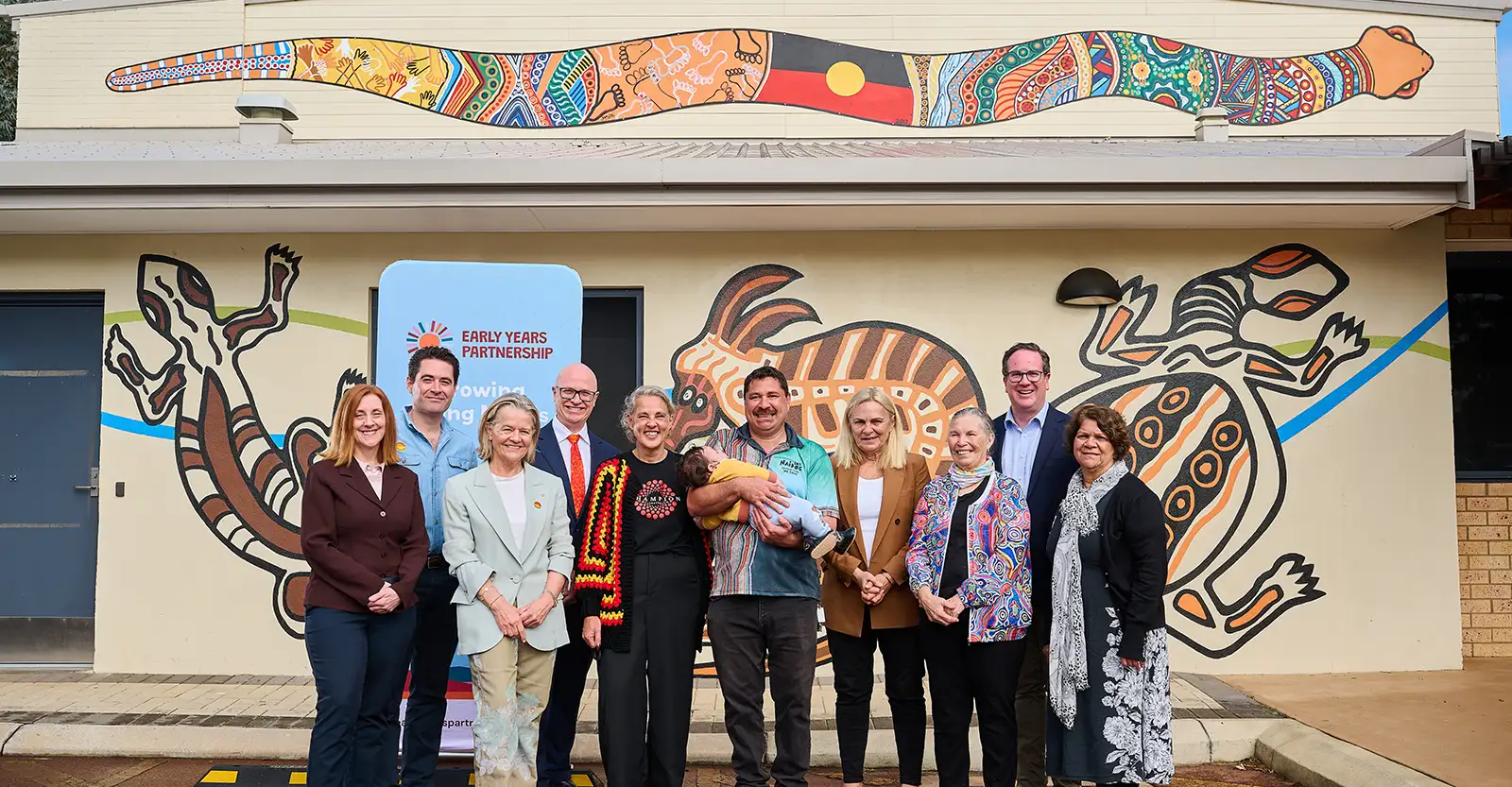
The Generation One brand was rolled into Minderoo’s broader bodies of work, and the goal it was founded on – parity within a generation – continues through our focus on closing the gaps that open early and compound over a lifetime: a healthy start for babies, providing families with the support they need and clear pathways from early childhood through school and into work.
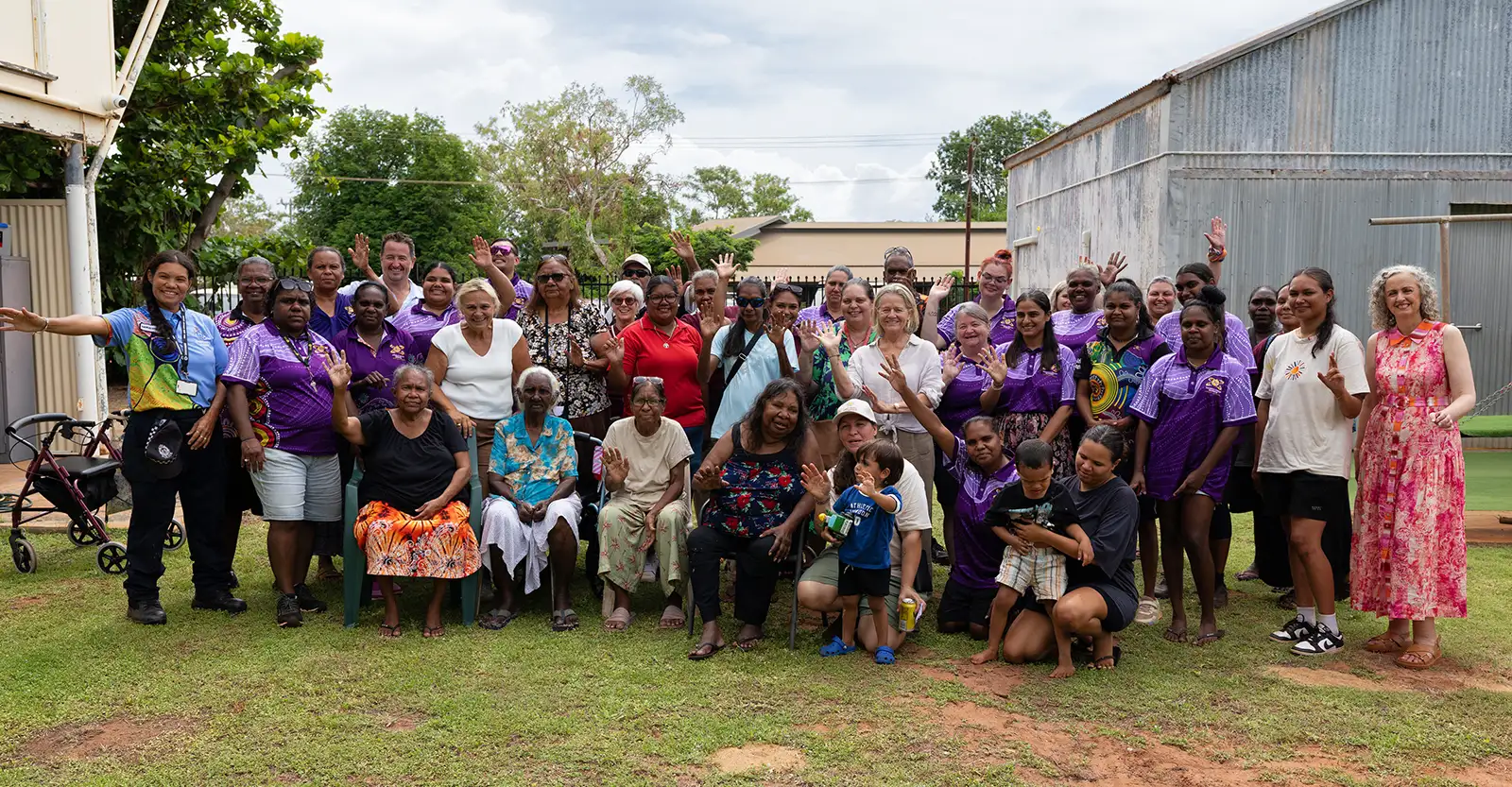
The 10-year Early Years Partnership with the Western Australian government is an example of that focus in action. The Partnership supports child wellbeing and school readiness in Armadale West, Central Great Southern, Derby and Bidyadanga by empowering local leaders to identify their priorities and run the projects that best help their own communities. The partnership has lifted health-check and kindergarten attendance and taken dental screening into parks and playgroups, bringing services closer to families.
This reflects Minderoo’s broader approach to lasting change – looking at what is causing the immediate symptoms of disadvantage and addressing them at the root cause.
Subscribe to our newsletter
Stay up to date with our First Nations work and our work across our focus areas and impact missions.
By signing up with your email, you agree to Minderoo Foundation’s Privacy Policy.