In a time of growing disconnection, local initiatives across Western Australia are demonstrating how community-led action can strengthen belonging, wellbeing and active citizenship.
In an increasingly digital world, nostalgia is having a moment.
We see it in online trends, in marketing, and in a growing cultural yearning for something slower, simpler, and more connected. After a decade in decline, flip phones and digital cameras are making a comeback, and vinyl and CDs have seen a resurgence in recent years.
This return to the physical reflects a broader longing for a time when technology existed but hadn’t yet taken us entirely in its grip.
The word nostalgia comes from the Greek nostos (returning home) and algos (pain or longing). It captures the bittersweet feeling of wanting to return to a time or place that feels deeply familiar but no longer quite exists.
But what if some parts of it still do?
Progress has brought extraordinary advances, yet many of us feel the quiet loss of everyday connection – the kind that once wove communities together. Dropping in to a friend’s place for a coffee, kowing your postie by name, gathering on weekends to watch a local sporting team play, or asking a neighbour for help moving a couch, instead of posting a request on Airtasker.
These moments haven’t disappeared entirely – but they’re becoming rarer. Across Australia, many people feel less connected to their neighbours, their streets, and the places they live.
And it raises an important question: How do we find our way back to each other?
As the world urges us to join more digital communities, what would it look like to reinvest in the local, real-life communities around us?
Here in Western Australia, two of our partners are already showing what this reconnection can look like in practice.
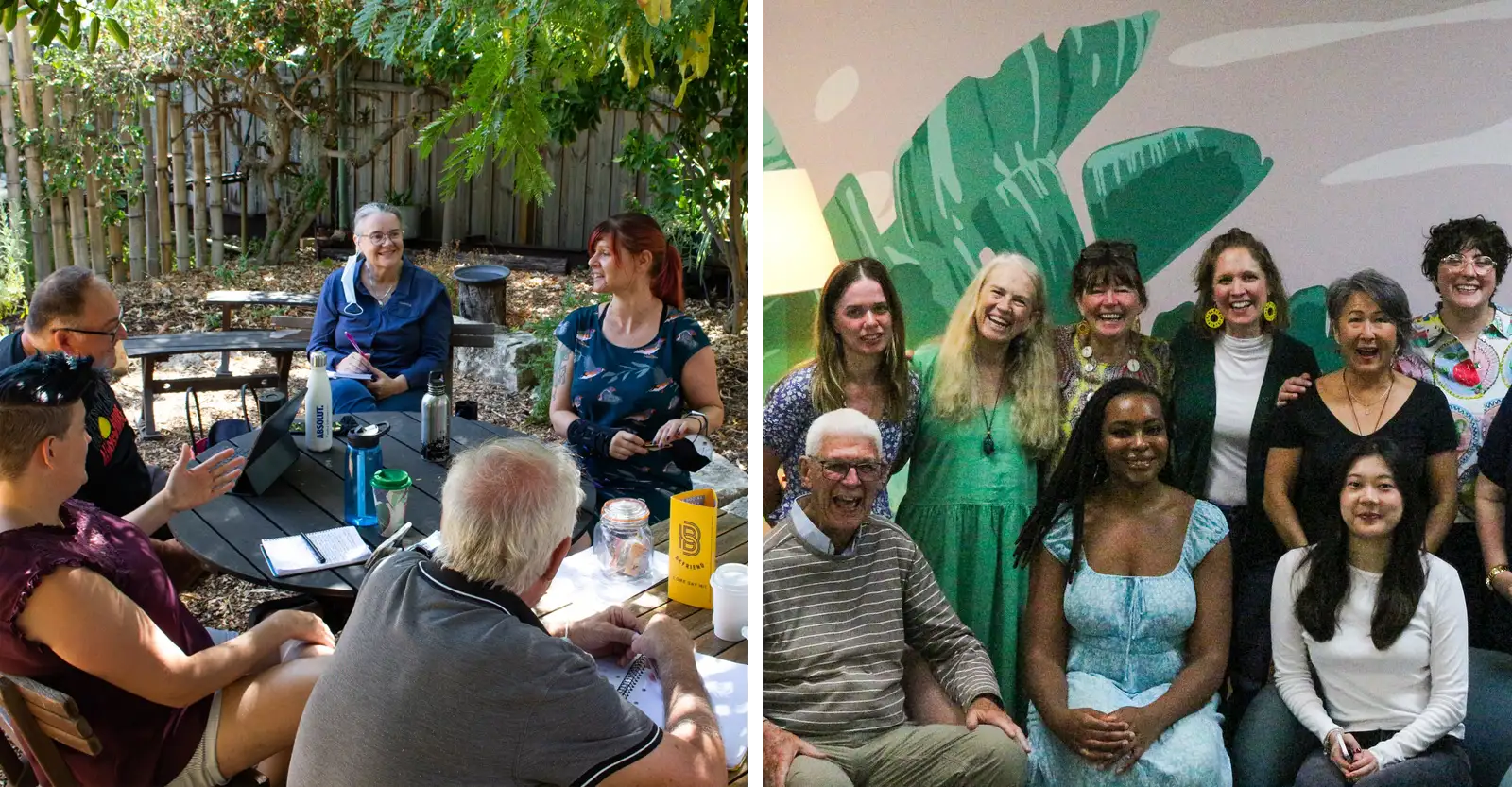
Through our Activating Civic and Community Participation project, we’re partnering with two inspiring organisations.
With our partners Town Team Movement and Befriend, we seek to better understand what enables locally led action to create thriving communities.
These two learning projects focus on strengthening connection, belonging, and active citizenship by learning directly from community builders, placemakers, and those already doing the work on the ground.
Rather than prescribing solutions, this approach centres lived experience, relationships and place, helping to surface what truly supports sustainable, community-led change.
Together, these partnerships offer rich insight into how local leadership, shared spaces and everyday acts of participation can help rebuild the social fabric of our communities.
Through these learning partnerships, supported by our broader research work, we’re learning what’s working on the ground, so we can strengthen and scale effective approaches over time. What we learn will help inform the development of practical tools, frameworks and strategies that support communities to connect and thrive.
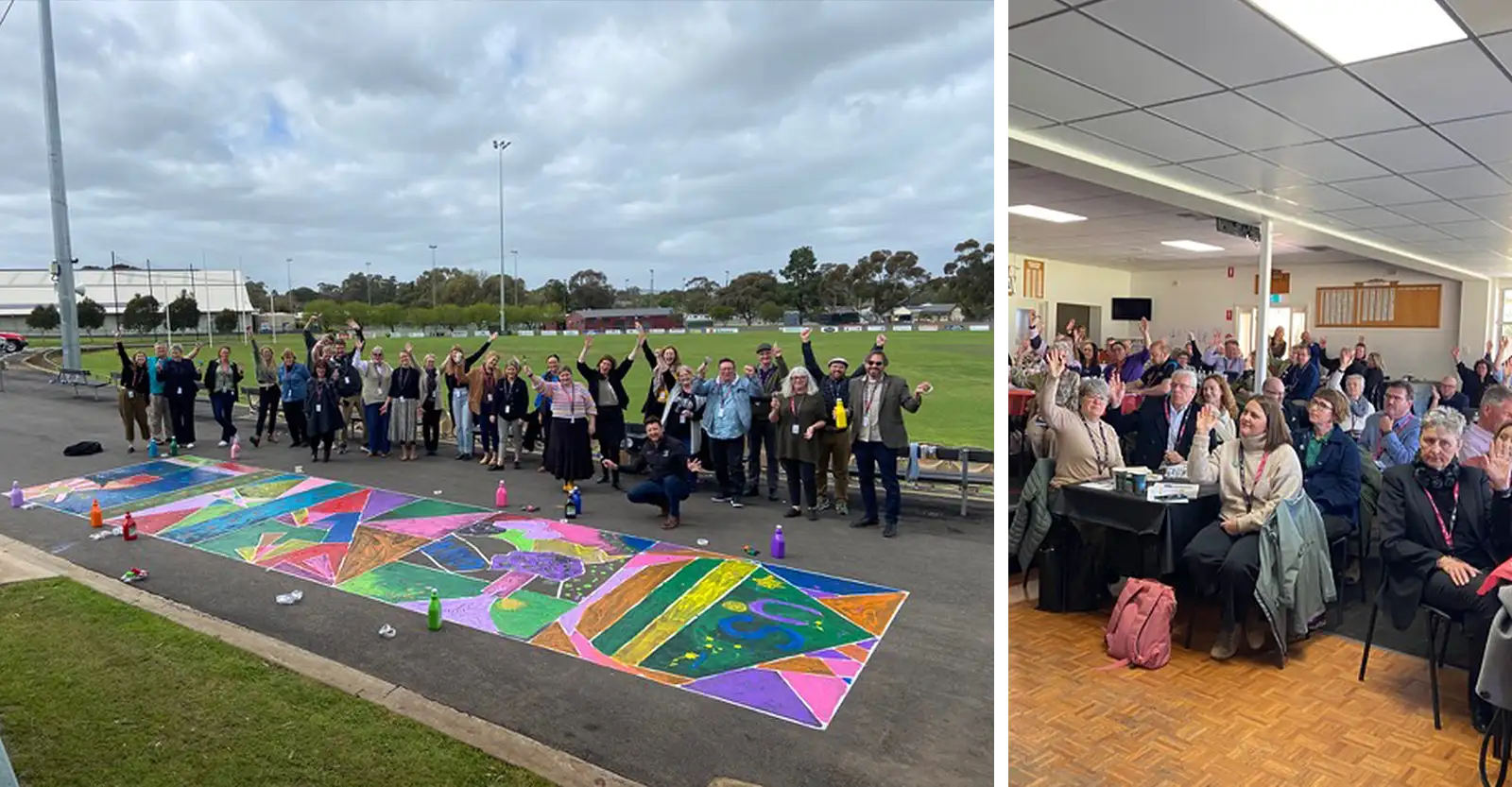
Small actions, big impact: Town Team Movement.
Town Team Movement is a non-profit social enterprise that empowers local people, businesses and governments to become active citizens in the places they live and work.
Through their Town Team model, they support groups of residents and stakeholders to collaborate on placemaking initiatives that make neighbourhoods more vibrant, connected and welcoming.
From revitalising local streets to hosting community events, Town Teams demonstrate how small, practical actions led by locals can have a lasting impact on how people experience their communities.
Town Teams Movement is fuelled by a purpose to assist and inspire everyday people to go from passive consumers to active citizens in their communities.
Our partnership with Town Team Movement focuses on exploring what it takes to adapt and scale their proven placemaking model into new jurisdictions, while retaining the local ownership and relationships that make it effective.
Through this learning project, we’re examining how structure, support and flexibility can work together to enable community-led action across different contexts.
Town Team Movement’s work highlights the power of active citizenship, showing that when people feel empowered to shape their local environment, connection, pride and belonging often follow.
Meet the team

Rory Murray, Manning Town Team Leader and Town Team Movement Operations Lead
Rory was working full time in IT, a career he genuinely enjoyed.
As his wife took on the 9-3 rhythm of school pick-ups, drop-offs and assemblies, Rory began looking for a way to be more immersed in his children’s lives and schooling , in a way that still fit around his work schedule.
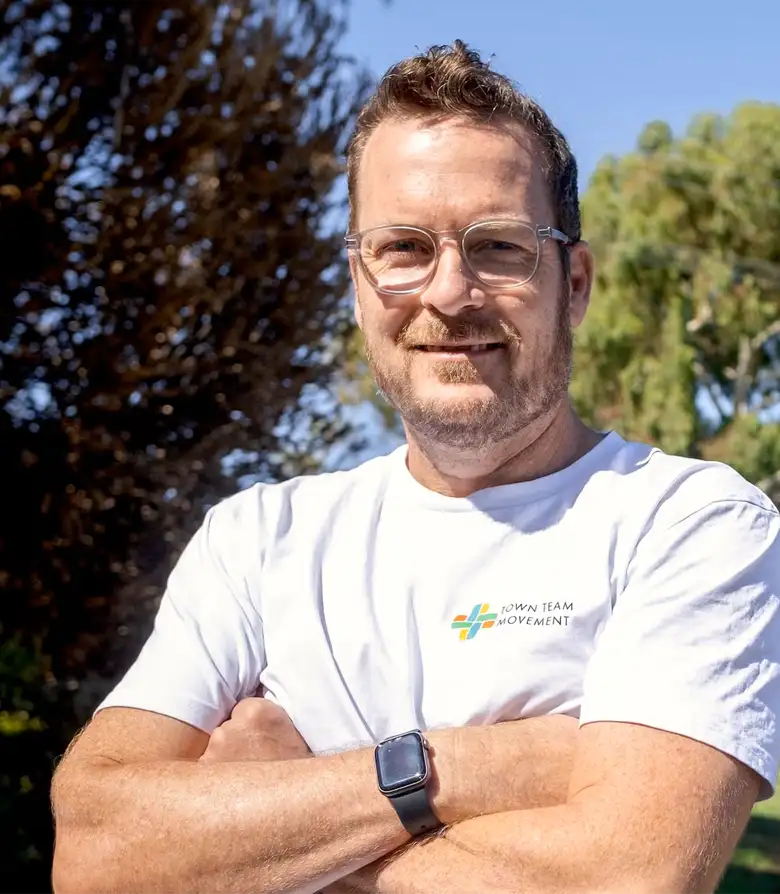
Like many busy working parents, he found that opportunity by joining the school’s P&C committee.
What started as a practical decision soon became a turning point. Rory went on to become P&C President, helped establish a school dads’ cycling club, and supported a series of vibrant school–community events – including a festival that activated a newly constructed local laneway.
Over time, this involvement led to an eventual career change into community-driven work, a move that fulfilled him more than his time in IT.
Along the way, Rory’s understanding of “home” began to change.
It was no longer confined to the four walls of his house but extended to the streets and shared spaces within a short walk – the places where he could run into neighbours and spend time with the community he’d been quietly cultivating.
As his involvement deepened, an opportunity with Town Team Movement came along that felt like a natural extension of the work he was already doing locally. It has allowed him to support community-led action not just in his own neighbourhood, but across others as well.
For Rory, community participation is simple but intentional. It looks like sparking conversations, asking questions, and making people feel like they – and their contributions – matter.
Listening to people’s stories has been central to that experience. Hearing perspectives from across all walks of life has reinforced what diversity brings to a community, while also reminding Rory that, despite our differences, we often share the same core values – family, connection and belonging.
One story, in particular, has stayed with him. Through a sense of belonging fostered by community initiatives, an immigrant chose to stay in Australia and call it home. When fatigue sets in, it’s moments like this that fuel Rory to keep going.
When it comes to getting started, Rory believes connection doesn’t require grand gestures.
His advice is straightforward: do one small thing to show care for the people and place you live. Sweep a footpath. Create a piece of art. Thank someone for their contribution. Small acts, he says, give others permission to build on them – creating a ripple effect.
And perhaps most importantly of all: get outside.
That lesson became personal on Rory’s own street.
When an avid gardener named Kev moved into the corner house, he began spending time outdoors and quickly learned the names and stories of everyone on the block, something Rory hadn’t managed after a decade living there.
Seeing this up close reinforced the importance of presence. It reflected something Rory recognised many people miss – the everyday familiarity that once defined neighbourhood life.
A mural was later commissioned and affectionately named “Kev’s Corner”. It remains a common meeting place for neighbours today. And whether Kev is pruning petunias or not, the artwork stands as a reminder of being outside, investing in the people around you, and as Rory puts it, being a little more like Kev.
As life becomes increasingly digital, Rory feels monocultural thinking is becoming more common. Stepping outside into shared spaces, he believes, offers a powerful counterpoint that builds empathy and reminds us of our shared humanity.
“Even if we’ve been steered away by technology, people still know it’s about building relationships – the power of that, and how quickly you can build them.”
It’s that simplicity that gives Rory the most hope for the future of communities.
Once you start, he believes, you realise just how possible – and how simple – connection can be.
And in that simplicity, Rory sees a reminder that connection isn’t something we’ve lost. It’s something we can still build, right where we are.
Building belonging from the ground up: Befriend.
Befriend is a Perth-based social enterprise dedicated to building inclusive, connected communities. Their work empowers everyday people to create spaces for belonging through grassroots initiatives. Because belonging doesn’t happen by accident: it’s created when everyday people are supported to bring others together.
Through our partnership, we’re working with Befriend to co-create and pilot a mentorship network for community builders – that is, the people who are already fostering connection in their neighbourhoods, workplaces and social circles.
This learning project is grounded in the lived experience of volunteer leaders, focusing on what truly enables them to sustain their efforts over time.
By listening closely to community builders themselves, the work explores questions of motivation, burnout, confidence and support. It also surfaces what helps people keep showing up, creating space for others, and strengthening connection at a local level.
At its core, Befriend’s work reminds us that community isn’t something that can be outsourced or automated. It’s built through relationships – one conversation, one gathering, one act of care at a time.
Meet the team

Samantha Hill, Befriend
For Samantha Hill, finding community didn’t happen overnight.
Now 58, Samantha describes her connection to the Kwinana community as something she’s searched for across many chapters of her life – and something she’s only truly found in recent years.
That sense of belonging began through Befriend, when Samantha joined a local sewing group through the Befriend Network.
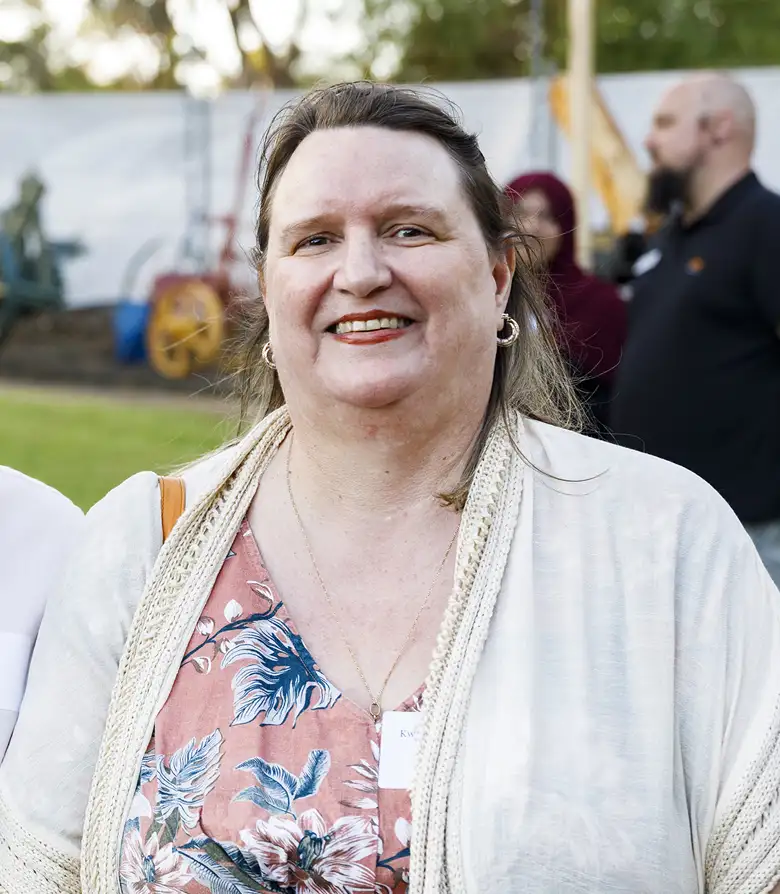
Over time, she became a familiar face in the group, returning week after week, building relationships and confidence along the way.
As she settled into the group, encouragement from others helped Samantha recognise her own strengths. Fellow group members noticed her warmth and openness, and suggested she’d make a great co-host. For Samantha, that recognition mattered deeply.
She reflects that this made her feel proud, and like a worthy person, worthy enough to step up.
That growing sense of confidence led Samantha to take on a co-hosting role and, today, she hosts and co-hosts several community groups across Kwinana.
She is also a regular host of the Wellard Community Lounge – a place-based activation delivered in partnership between Befriend and the City of Kwinana – and is now extending her contribution further through Befriend’s community-building mentoring program.
At the heart of her role is care.
For Samantha, hosting means creating a space that feels open and welcoming, especially for newcomers. She introduces people to one another, helps conversations flow, and supports people to feel comfortable simply being there. Meeting new people and watching connections form is what brings her the most joy.
Over time, the impact has been personal as much as communal. Samantha speaks openly about the growth in her confidence, self-esteem and sense of responsibility.
As her confidence has grown, so too has her involvement. Samantha now volunteers with additional local groups, including Aboriginal community initiatives and networks connected through the local council. Many of the people she once passed by are now familiar faces – people she greets at shops, local businesses and community spaces.
One moment stands out for Samantha. A woman who once struggled to leave her house began attending a local writing group, then joined a storytelling group, and has since built the confidence to host a group herself.
Seeing others take on similar journeys reinforces for Samantha why creating welcoming spaces matters.
For her, the future of community lies in shifting focus away from material things and back toward what’s essential: valuing people for who they are.
A magnet on her fridge captures it simply:
It’s a reminder Samantha returns to often – and one she hopes others will take with them too.
Reconnection doesn’t require a return to the past.
It begins in the present – through relationships, shared spaces and everyday acts of participation.
These partnerships show that community isn’t something we’ve lost, but something we can choose to build. When people are supported to lead locally, connection deepens, resilience grows, and neighbourhoods become places where people feel they belong.
At a time when many of us are craving that sense of belonging, this work invites all of us to take part: to support a local initiative, join a community group, or take one small step toward connection where we live.
Because the path back to each other starts close to home.
Subscribe to our newsletter
Want to stay in the loop on our Natural Ecosystems, Gender Equality, and Communities work?
By signing up with your email, you agree to Minderoo Foundation’s Privacy Policy.